
A Pyromancer's Journey Through the Living Lands: Mastering Fire in Avowed
Discover Avowed fire mage guide and pyromancer build tips for mastering explosive magic and dominating the battlefield.
I am an artist, and my canvas is the battlefield. My brush is a wand, my palette the very essence of magic, and my favorite color? A brilliant, blazing crimson. In the sprawling, untamed beauty of the Living Lands, where every shadow hides a secret and every ruin whispers of forgotten power, I have found my true calling not in subtlety, but in glorious, unapologetic conflagration. To be a fire mage in Avowed is to dance on the edge of chaos, to hold the primal force of creation and destruction in the palm of your hand. It’s a path of pure, visceral satisfaction—there’s nothing quite like the whoosh of igniting air, the sizzle of melting armor, or the panicked scatter of foes before a wall of flame. This is my testament, forged in ember and ash, on how to become the Scion the world fears.
Let’s get one thing straight from the jump: a true pyromancer is not a one-trick pony. Sure, setting everything ablaze is the endgame, the pièce de résistance, but you’ve got to set the stage first. Pouring every skill point into fire spells from the get-go is a one-way ticket to an early grave. A master of flames is, first and foremost, a master of survival. You need tools to control the flow of battle, to create the perfect moment for your grand inferno.

My first, and perhaps most crucial, lesson learned was the value of Tanglefoot. When I’m not traveling with Marius and his handy Binding Roots, this Ranger skill is my best friend. It’s the ultimate crowd-control setup. With a cast, I can root an entire pack of snarling beasts or bandits in place. It’s like painting a target on the ground—a convenient, clustered masterpiece just begging for a fiery brushstroke. For a squishy Wizard like me, those eight seconds of immobilized enemies are pure gold, granting me the breathing room to line up the perfect shot. It’s the difference between casting in panic and casting with purpose.

Survival, however, isn’t just about keeping enemies at bay. It’s about enduring their inevitable blows. The life of a glass cannon is thrilling but fragile. That’s why I invested early in the Fighter tree for Constant Recovery. This passive is a silent guardian. In the lulls between explosions, as I reposition behind a crumbling pillar, I can feel my wounds knitting back together, slowly but surely. It’s the steady drip that refills the well, and when ranked up, it can turn a near-death experience into a tactical retreat. Combined with a sturdy companion to draw aggro, it lets me play the long game, whittling down hordes from a distance while my vitality trickles back.

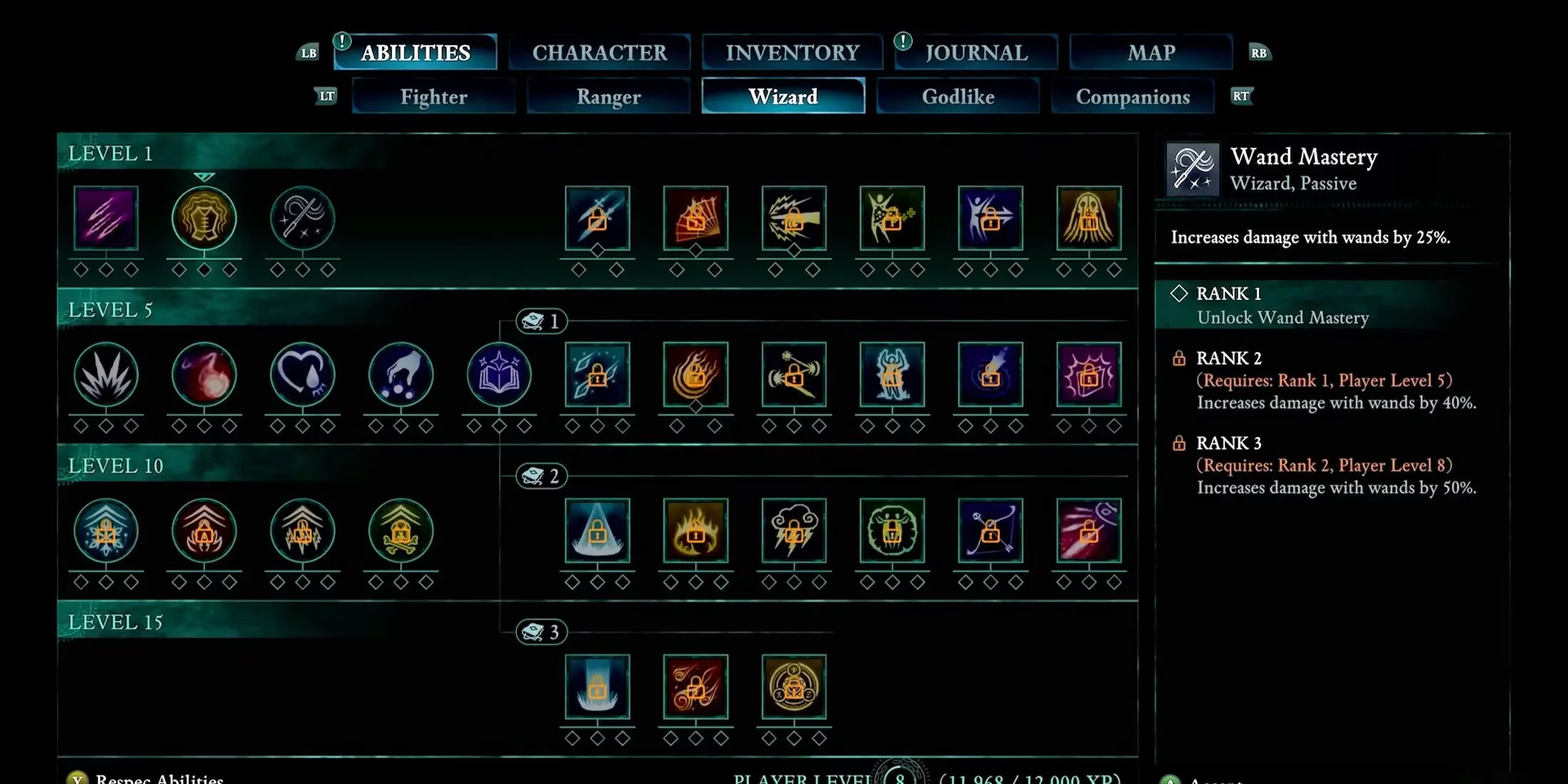
Of course, a true artist needs more than one tool. Spamming fire spells is a surefire way (pun intended) to drain your Essence dry. That’s where Wand Mastery comes in. Don’t sleep on this passive! A wand isn’t just a fallback; it’s a complementary instrument. When the air grows too thick with smoke and my magical reserves dip low, a swift wand shot keeps the pressure on. It’s a precise, Essence-efficient tool that perfectly counters the wide-area chaos of my fire spells. Bringing it to rank two for that sweet 40% damage bump? It’s a no-brainer. It ensures I’m never truly disarmed, even when the well of magic runs temporarily dry.
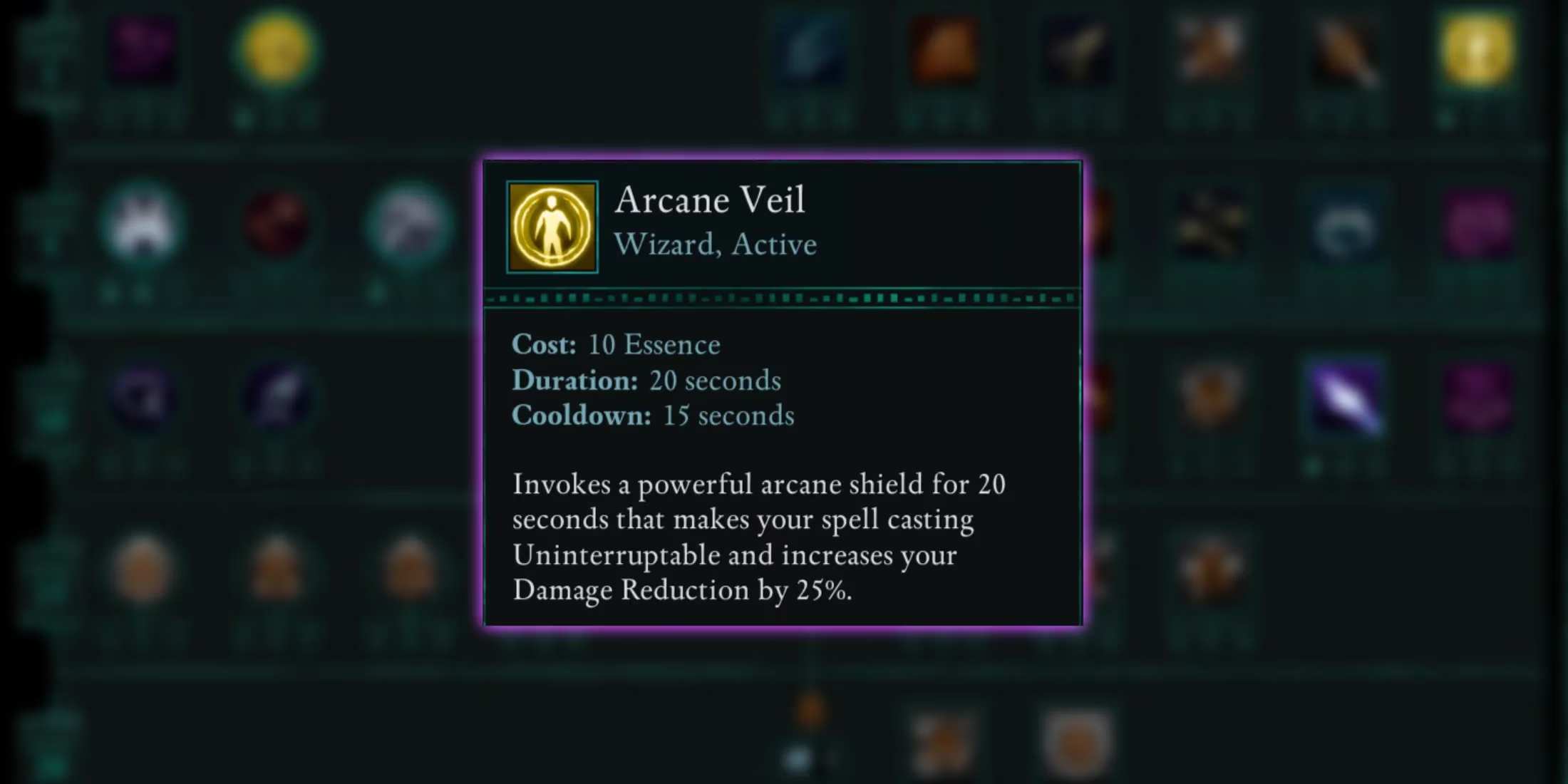
For those moments when control fails and the battle gets too hot to handle, I have a ace up my sleeve: Arcane Veil. Sometimes, you just need a personal bubble. This spell is my "oh crap" button. A quick incantation and I’m shielded for a full 20 seconds—precious time to reassess, reposition, or simply unleash hell without interruption. It’s a more selfish defense than Tanglefoot, but in the thick of a melee, when axes are swinging and arrows are flying, that personal shield is the difference between casting a Fireball and becoming a stain on the cobblestones.
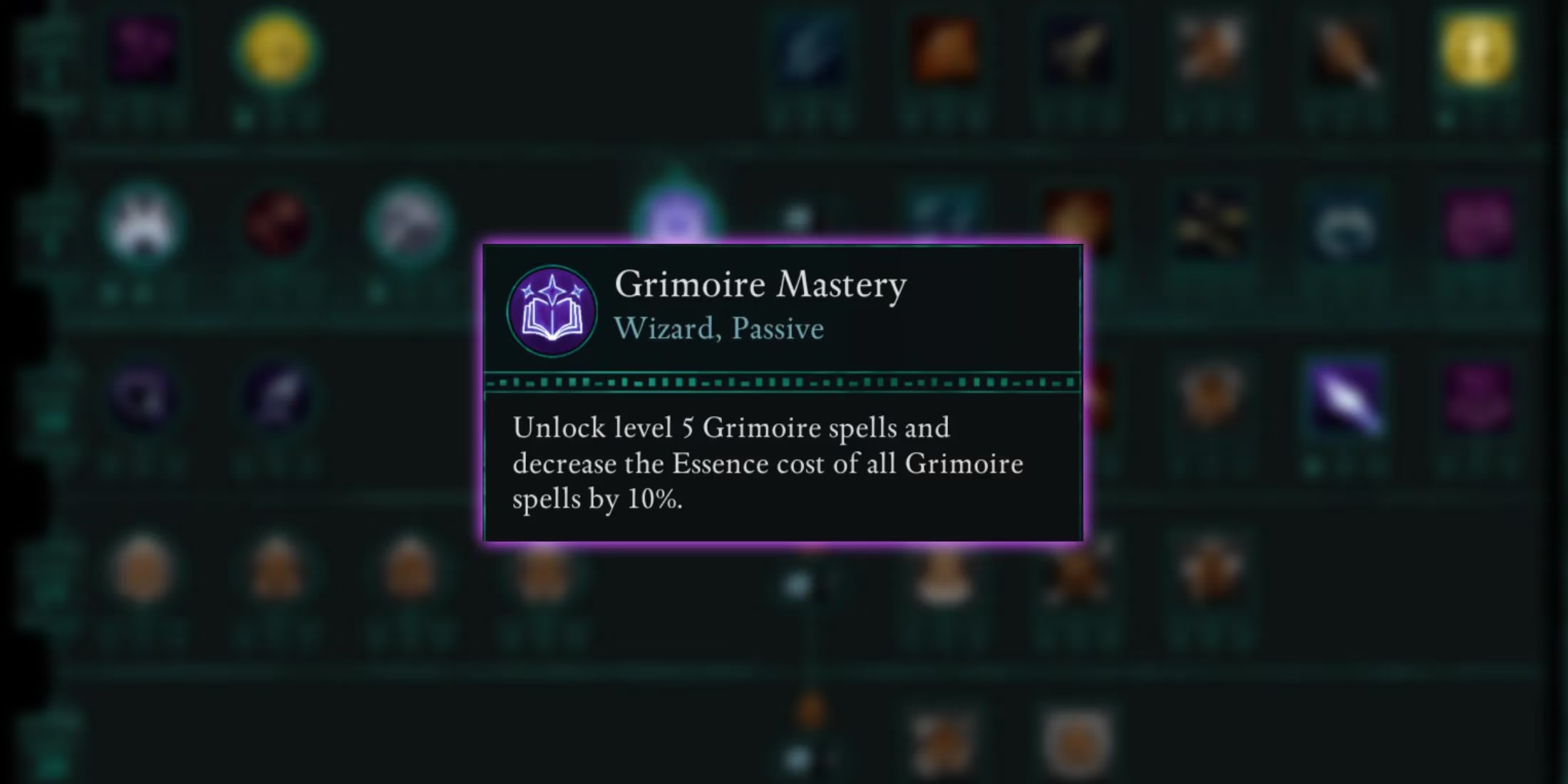
Now, let’s talk about the core of the build, the engine of destruction: Grimoire Mastery. This is where a pyromancer evolves from an arsonist to a maestro. A Grimoire isn’t just a spellbook; it’s an amplifier. The synergy here is everything. When you unlock a spell in your skill tree and cast it from a Grimoire, you’re not just casting it—you’re supercharging it. Imagine my Fan of Flames, already potent at rank two. Cast it from the right Grimoire, and it erupts as a rank three cataclysm: wider, hotter, longer-lasting, and cheaper to cast. It’s like adding jet fuel to a bonfire. Reaching rank two in this mastery is non-negotiable; it’s the cornerstone that elevates every fiery spell in your arsenal (Meteor Shower aside, the ultimate prize).
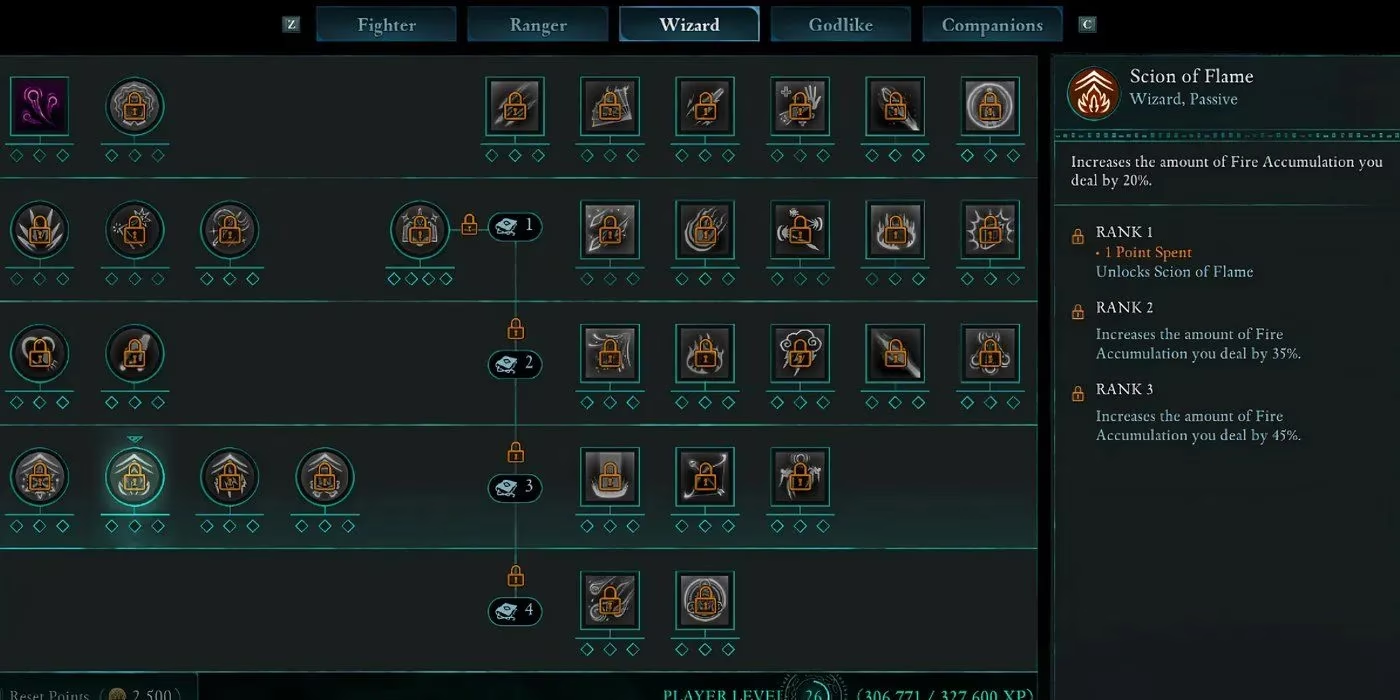
And what fuels this supercharged fire? Scion of Flame. This passive is the heart of the build. It’s so obvious it almost goes without saying, but I’ll scream it from the rooftops: MAX THIS OUT. A 45% increase to Fire Accumulation? That’s not just a stat bump; that’s a paradigm shift. Enemies don’t just get burned; they ignite faster, they combust sooner, they spend more of their brief, remaining lives wreathed in agonizing flame. The damage-over-time becomes relentless, a constant, searing reminder of your presence. By level 20, this should be your crown jewel.
With the foundation set, let’s revel in the arsenal itself. A pyromancer’s toolkit needs variety for every occasion:
- Ring of Fire: My personal space invader. When the mobs get too close for comfort, I become the eye of the storm. This hollow circle of flame is both shield and spear, melting weaker foes who dare to approach. It’s less effective against single, powerful targets, but for clearing swarms of spiders or skeletons? Chef’s kiss.

- Harvest Essence: The unsung hero. In the mid-game, Essence is life, and you’ll burn through it like kindling. This passive is your sustainability. Why rely on scarce potions when every foe you slay leaves behind Essence fragments? A quick melee swipe or wand shot to finish an enemy, and you’re topped up, ready for the next volley. Rank this up, and you’ll rarely need to touch a healing item again.

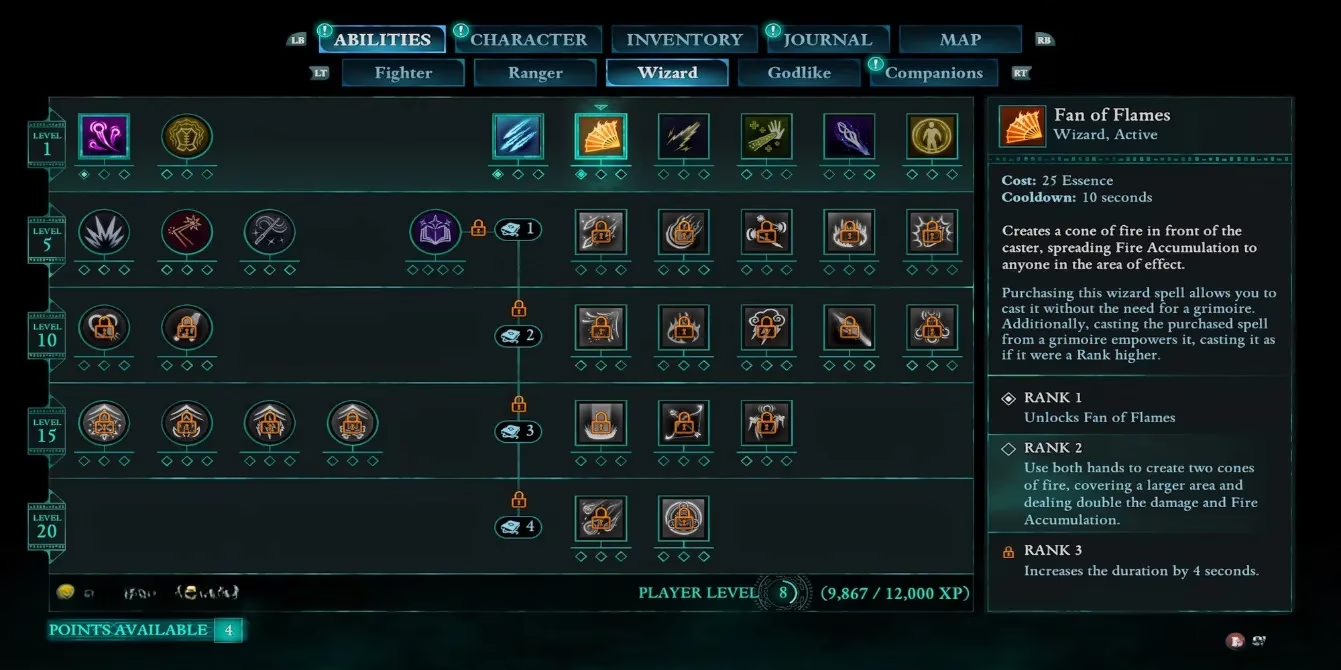
- Fan of Flames: The workhorse. It may not have the cinematic flair of a Fireball, but for efficiency, nothing beats it. A quick sweep of the hand, and a wide cone of fire reduces groups of low-to-mid tier enemies to cinders. With Grimoire Mastery boosting it? It’s a delete button for mobs. Simple, effective, brutally elegant.
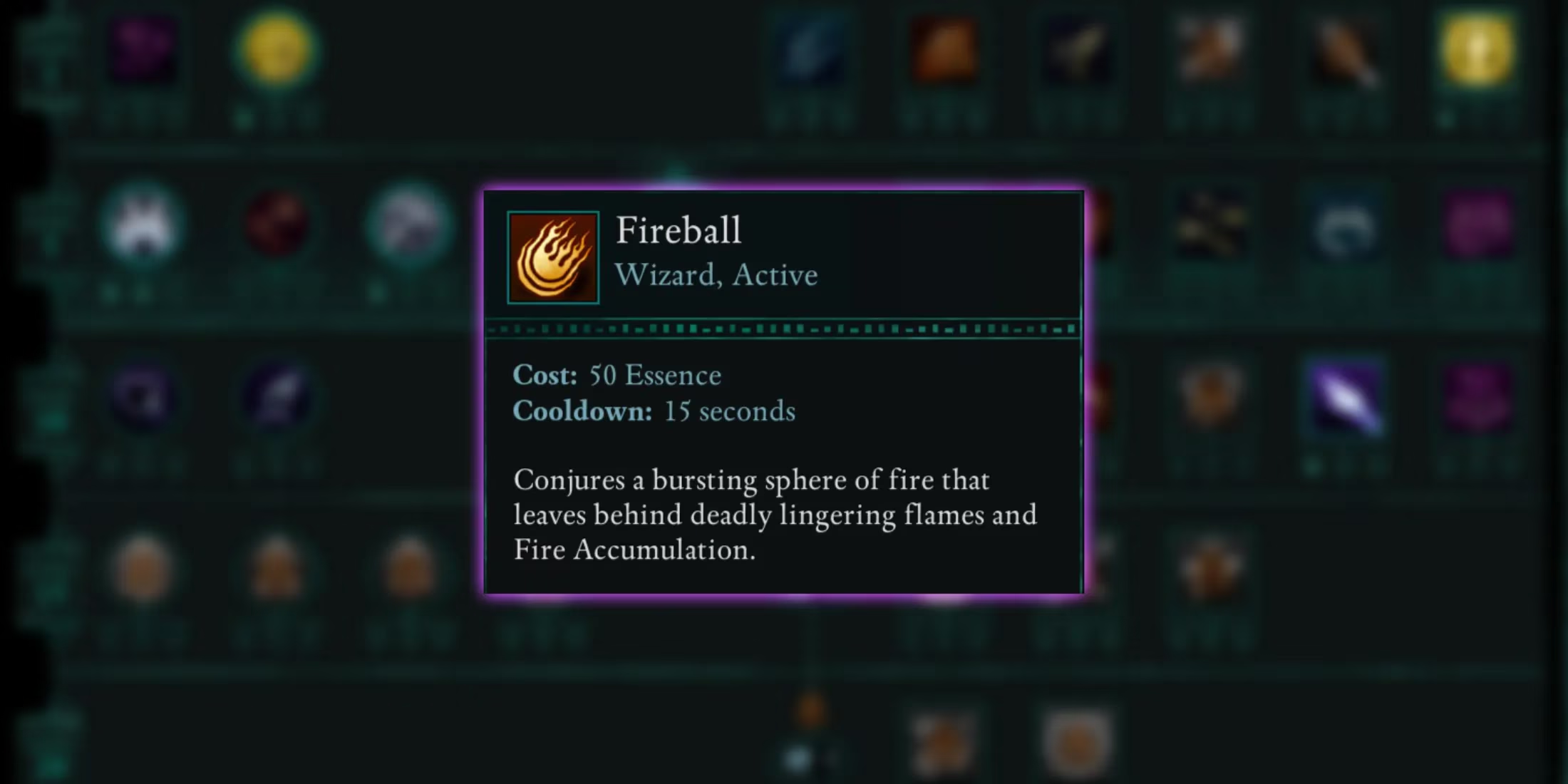
- Fireball: The grand finale. This is the spell you save for the big moments. The stubborn boss, the elite knight, the monstrous aberration that thinks it can tank your damage. Fireball is more than an explosion; it’s an event. It carves a crater of lingering flame, stacking Fire Accumulation at an insane rate, ensuring that even if they survive the initial blast, they’ll burn in the aftermath. It’s the exclamation point at the end of a fiery sentence.
This, then, is the symphony of destruction. It’s a build that demands patience and foresight, investing in defense and utility to enable its overwhelming offense. You start as a survivor, using roots and shields to create opportunities. You become an engineer, mastering tools like wands and grimoires to optimize your craft. And finally, you ascend as a force of nature, where every spell is amplified, every burn is catastrophic, and the world itself seems to combust at your command. To walk this path is to embrace a beautiful, dangerous philosophy: sometimes, the answer to life’s complex problems really is just to set it all on fire and watch the world burn brightly, if only for a moment, under your glorious command.