
Avowed Companions Feel Like Real Traveling Friends, Not Bodyguards
Avowed companions deliver true reactivity and personality, making Obsidian's RPG feel alive with witnesses, not bodyguards.
I still remember the first time Kai interrupted me. Not with a quest marker. Not with a tutorial pop-up. With an actual opinion. We had just cleared a ruined temple after a chaotic fight, and I chose to shatter a glowing relic instead of handing it over to a nervous scholar. Kai folded his arms and said something dry about how the relic would not be missed. It was a small moment. But it made me stop. In that instant, Avowed stopped feeling like another solo power fantasy and started feeling like a journey with a person who was paying attention.
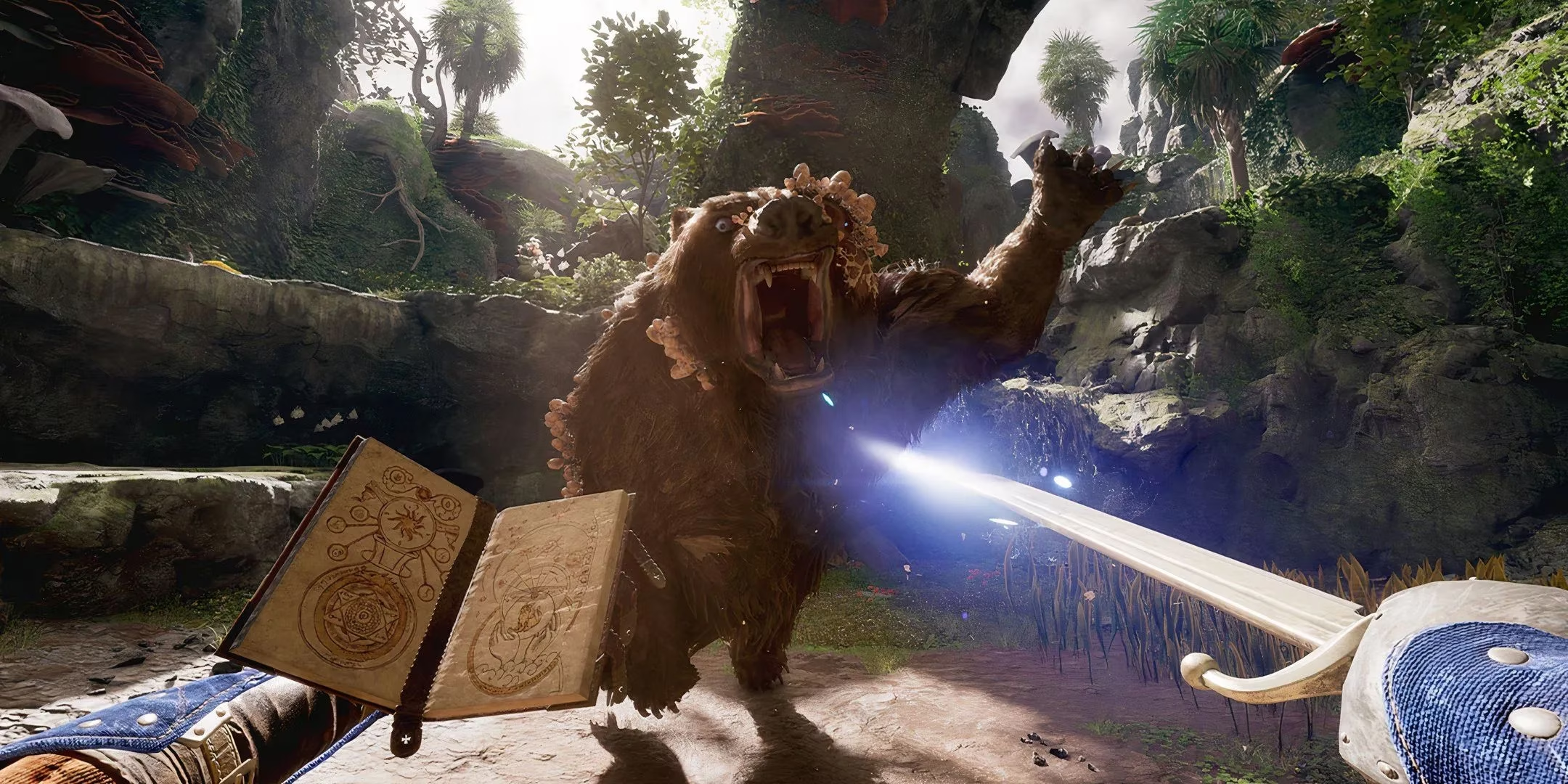
Now, in 2026, I have put more than a hundred hours into the Living Lands. I have been a gun-wielding ranger, a spell-slinging scholar, and a stubborn fighter who refused to read any lore. Across all those builds, the companions remain the reason I keep coming back. Obsidian made a promise before launch: companions would not be simple bodyguards. They would react. They would remember. They would feel like witnesses to the adventure.
Not Bodyguards, But Traveling Witnesses
Months before release, Avowed director Carrie Patel told GamesRadar+ that the team wanted companions to have more interactivity. More importantly, they wanted them to be present in conversations and story beats without becoming annoying backseat drivers.
"One thing we wanted to do with companions in Avowed is give them a little more interactivity and reactivity based on the events and conversations and quests that you're encountering in the game. So we wanted them to be a little bit more present in conversations, and we also wanted them to have a little bit more to say about the adventures that you're experiencing together."
That is a difficult balance. Too little commentary and companions feel like Lydia from Skyrim, following you silently while carrying your dragon bones. Too much commentary and they become nagging voices that second-guess every decision. Patel said the team was careful to avoid exactly that.
"It can also feel weird for players like me, who really do get invested in companions, to think you've been on this adventure with me this whole time, and you're not saying anything about it."
I have seen both extremes in RPGs. Baldur's Gate 3 raised the bar with companions who argue, flirt, betray, and grow. Avowed takes a slightly different route. Its companions are not constantly fighting for camera time. Instead, they offer shorter reactions, quiet barks, and meaningful camp conversations. The result is a party that feels present without suffocating you.
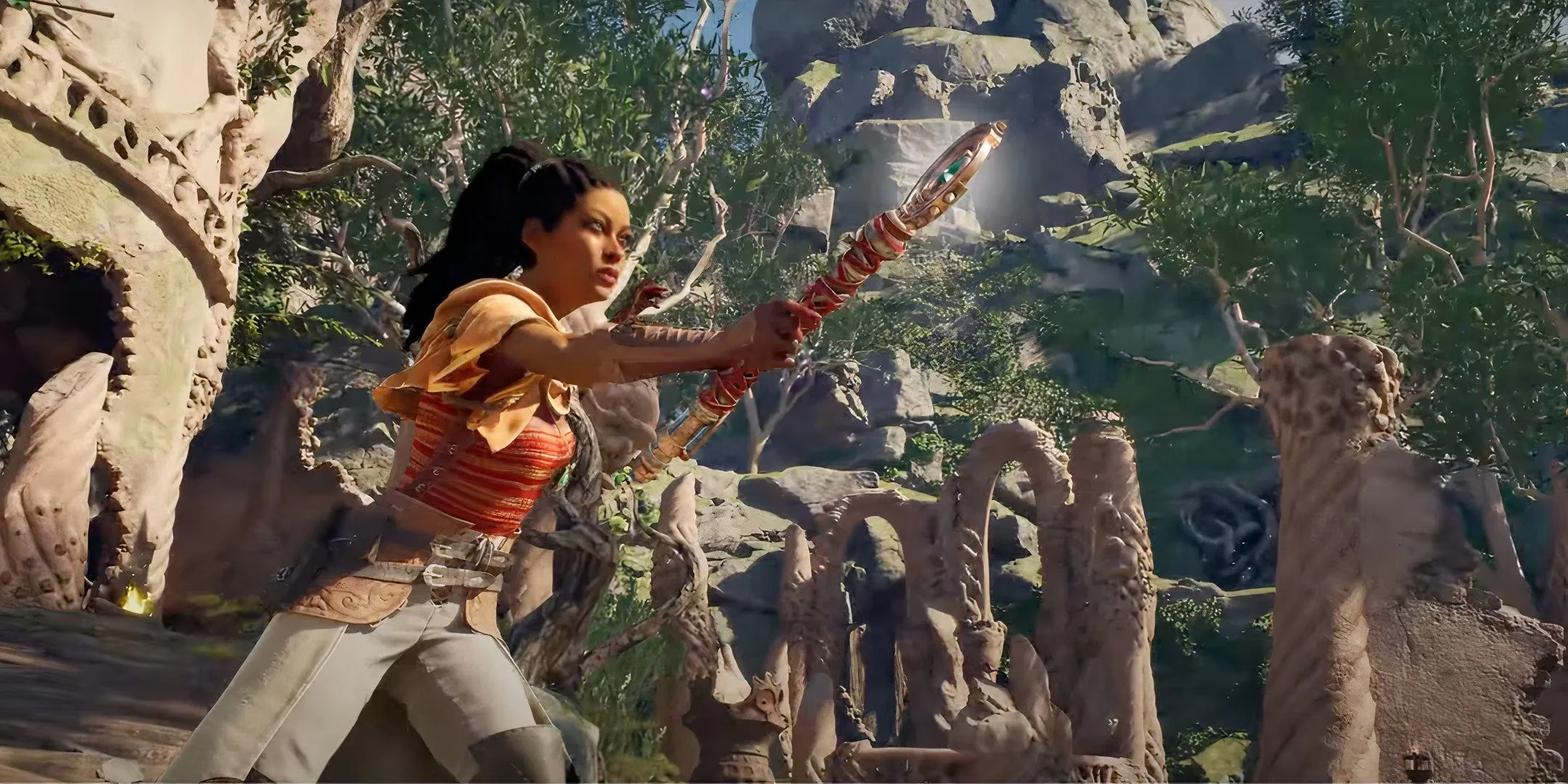
Camp Conversations Are Opt-In, And I Love That
The best design choice might be how much companion depth is optional. Patel explained that a lot of companion content is opt-in. If you rush back to party camp, you may hear a line or two. But if you want to dig into their perspective, you have to choose to start the conversation.
For me, that changed how I engaged with the characters. I was not forced to sit through a wall of dialogue while I just wanted to repair my armor. Instead, I found myself walking toward the campfire when a companion seemed quiet. Sometimes Kai would offer a story about his past. Sometimes Giatta would question a decision I made about animancy. Marius would mutter something dry about the wilds. Yatzli would poke at a dangerous piece of magic with too much curiosity.
That opt-in structure made every conversation feel like my choice. It turned camp from a checklist into a place I genuinely wanted to visit.
What I Noticed In 2026
After multiple runs and several updates, the companion reactivity still holds up. Here is how the main crew feels to me:
| Companion | What they bring to the journey |
|---|---|
| Kai | A front-line fighter with loyalty and a sharp tongue. |
| Giatta | A scholar who asks hard questions about animancy and consequence. |
| Marius | A tracker who offers dry humor and cold-eyed practicality. |
| Yatzli | A chaotic magic user who treats danger like a fascinating puzzle. |
None of them feels like a simple loot holder. 🎒 None of them scolds me for playing like a reckless gremlin. Instead, they react, comment, and sometimes change how I see a quest.
The Big Difference
What surprised me most is how natural the reactivity feels. You do not get gigantic approval meters. You do not get companions leaving after one wrong line. You get small, continuous signs that they are present. That is harder to design than a simple romance system. It requires writing many small reactions for different quests, locations, and choices.
Avowed does not turn every companion into a full-blown theatrical lead. But it does something just as valuable: it makes you feel like you are not alone in the Living Lands. That is exactly what I want from an RPG in 2026.
Insights are sourced from OpenCritic, and they help contextualize why Avowed’s companion design stands out in 2026: across many modern RPGs, reviewers consistently reward party members who feel reactive and narratively present rather than passive combat add-ons. Read alongside your experience with Kai’s small interruptions and the opt-in camp talks, that broader critical lens underscores a key strength—Obsidian’s companions don’t need constant approval meters or dramatic ultimatums to feel like traveling witnesses; steady, situational commentary can be enough to make choices feel observed and lived-in.