
Avowed's Death Twist Was Promising But Ultimately Fizzled Out
Avowed's early promise is undercut by a canonical death that never delivers on its narrative potential, leaving the revival shallow.
I had quite high hopes for Avowed, and the opening hours really matched that enthusiasm. The character creator, while not the most robust I've seen, was flavoursome with its thematic use of Godlike features, letting me craft an avatar that looked both beautiful and deeply tied to the world's lore. The shipwreck tutorial didn't just hold my hand—it tossed me into a storm that felt active, complete with a decision that rippled into an early quest. When Kai, my first companion, swaggered onto the scene, I thought, "Alright, this is going to be a banger."
Then I made my first tentative steps through the Dawnshore, unlocking fast-travel points and getting a feel for the world. Combat felt a bit bare-bones initially—I was just a starting character, after all—but that "wet behind the ears" vibe fit the RPG mold. The real turning point came when I reached Paradis, the first major city. It felt like the story was finally gearing up. Unfortunately, that's where things hit a wall. Or rather, that's where I died.
A Canonical Death That Kills Interest
When I first set foot in Paradis, a cutscene triggered: arrows flew from the city's central tower, piercing my chest and gut. And not just a "you're hurt but will miraculously survive" kind of thing. The game was painfully explicit—I was dead. Gone. Pushing up daisies. The lilies were practically being arranged for my grave. Then, I woke up. That moment sent chills down my spine. Finally, a game that respects death! I thought this would be a major narrative pivot, something to make death feel weighty. Spoiler: it wasn't.
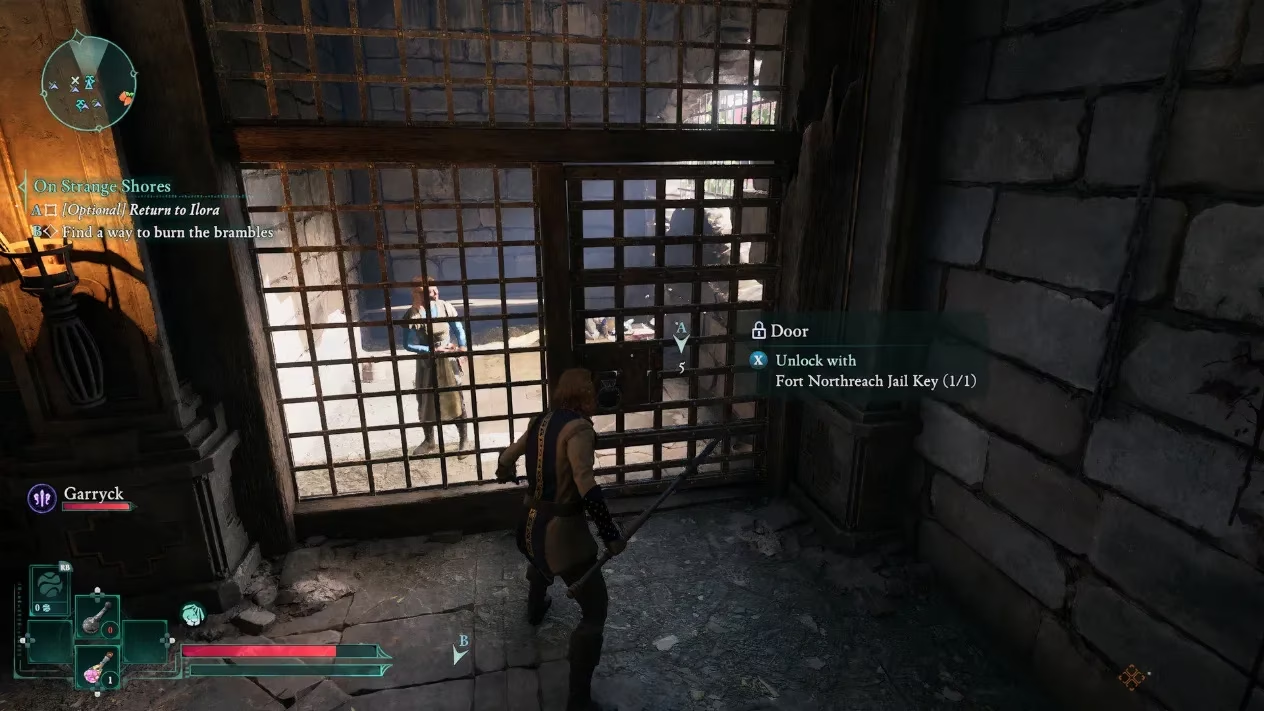
Video games have this weird relationship with death. I've "died" dozens of times in Avowed—bad timing, underleveled quests, just generally sucking—but those were just gameplay failstates. Real deaths, the ones that count, are rare. Avowed seemed to be toying with that idea beautifully: a canonical, story-driven demise that gifts you a power-up (fall in battle and you can come back at half-health) and sets up a revenge arc. I recruited Marius, a tracker, to help sniff out the culprits. Turns out it's just some garden-variety political hit. You're the Emperor's Envoy, people hate the Empire, so they offed you. No hard feelings, right? I tracked them down and returned the favor—they stayed dead, no fancy resurrection for them—but the whole affair felt like a wet firecracker. The revival, which could have been a spine-tingling thread running through the entire story, went straight onto the backburner. There are no other "canon" deaths; every other time you bite it, you just respawn as if nothing happened. The big twist became a one-off cutscene that ultimately meant jack.
Triple-Decker Chosen One With a Dollop of Trope
And then the real narrative identity crisis kicked in. A huge chunk of the game revolves around discovering which god your Godlike features are linked to—since it's super unusual you don't already know—and that mystery is supposedly tied to your resurrection. But instead of feeling profound, it piles more fantasy tropes onto an already wobbling stack. I'm a Godlike, which already screams "special little darling." But wait, I'm extra special because I don't even know my own god, and I'm also the Emperor's right-hand envoy. That's three layers of Chosen One right there, and on top of that, I get a generic blight-sweeping-the-land main quest. It's a hat on a hat on a hat, and the hat shop is on fire.
If the narrative had leaned into my death properly, I might have felt a genuine stake in protecting Paradis. Imagine a city that literally killed me—and yet I choose to defend it because its people need help. That would have been a redemption arc, a bond forged in blood. Instead, I'm just an unkillable anomaly who shrugs off peasant problems. The emotional hook got yanked away before it could even set. The whole thing smacks of a team afraid to let players sit with discomfort, much like Dragon Age: The Veilguard's safety-first approach. Why give me a resurrection motif if you're just going to treat it like a party trick? Why not have my subsequent deaths carry some narrative weight, even a line of dialogue about how "it happens again"? Nope, after that one early scene, the game reverts to standard save-load immortality.
Squandered Boldness
So much of Avowed feels like a missed opportunity. The world is gorgeous, the combat eventually opens up with some crunchy spell-slinging and swordplay, and the first hours promise a tale that dares to be different. But the quests quickly devolve into a mess of fetch-this, clear-that, and the main story never recovers from fumbling what could have been the boldest twist in gaming this year. That canonical death, which I genuinely believed would shake up the genre, ended up as a forgettable cutscene I only remember because of how little it ultimately mattered. In a way, that's the perfect microcosm of Avowed: a flash of greatness that gets buried under a mountain of safe, trope-laden mediocrity. I walked away not angry, just disappointed—and honestly, that's worse. The game killed my character, but it also killed my buzz.