
Avowed's Flexible Skill Trees Explained: Fighter, Ranger, Wizard, and a Hidden Fourth
Avowed skill trees and RPG mechanics offer classless, freeform builds, letting players customize combat styles for unique gameplay.
In 2026, the conversation around Obsidian Entertainment's upcoming RPG Avowed has shifted from anticipation to deep tactical speculation. After years of teases, the developers have finally peeled back the curtain on one of the game's most intriguing systems: its classless, freeform skill trees. Simply put, Avowed doesn't want to tell you how to play. It wants you to grab a sword in one hand, a spellbook in the other, and maybe a bear at your side for good measure. It's a multiclass lover's paradise, and the team at Obsidian seems almost giddy about the chaos they're enabling.
Game director Carrie Patel recently sat down to break down the four skill trees that will shape every character. Three have been fully detailed, while a fourth remains shrouded in mystery—teased but not yet revealed. Here's the thing: Avowed’s design philosophy is all about viability. There’s no “wrong” way to build your Envoy, and every combat option stays relevant from the first skirmish to the final boss. As Patel explained, the goal is to make you feel powerful, no matter which path you tread.
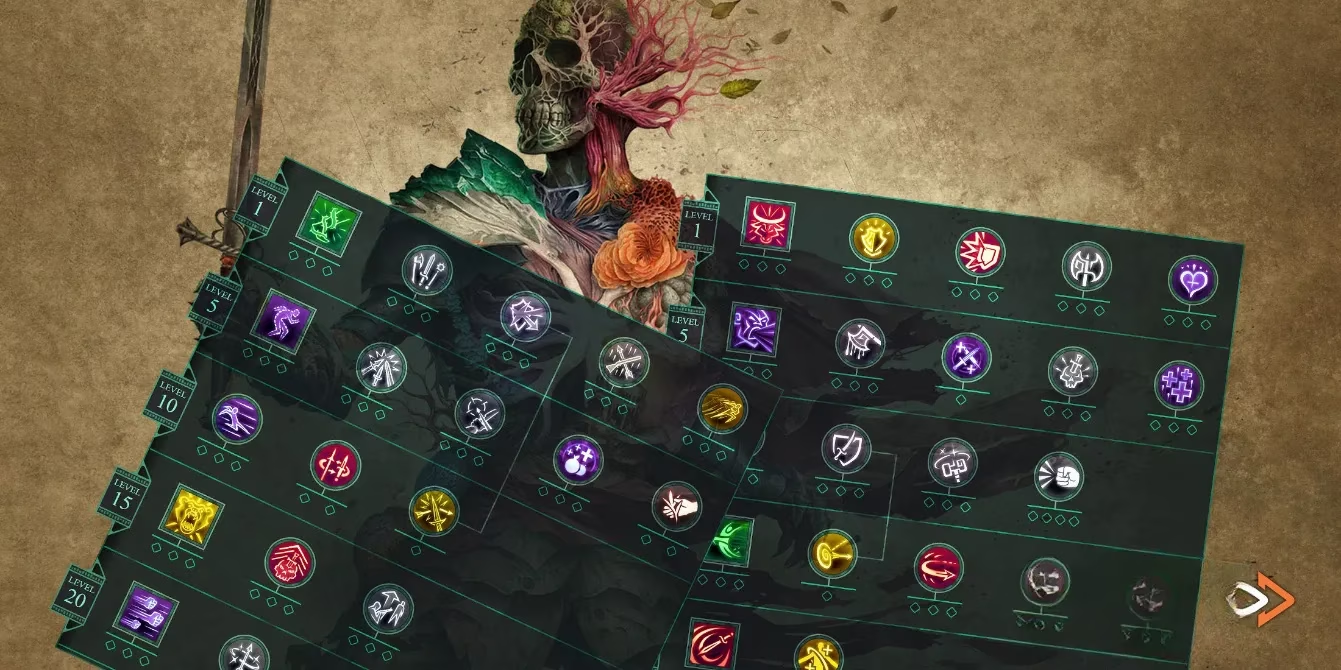
Let’s start with the tree that will feel most familiar to anyone who’s ever wanted to charge headfirst into a pack of enemies while wearing the heaviest armor available: the Fighter. This is the domain of raw melee power, and Patel described it as “focused on defense, damage mitigation, two-handed weapons, and mobility.” In other words, it’s the tree that says, “Sneaking? Who needs sneaking?” If you pour every single point into the Fighter tree, you’ll craft a character that plays like a classic Barbarian—someone who “does massive damage with huge weapons, who charges and jumps about, and generally smashes things.” It’s a straightforward promise, but don’t mistake simplicity for lack of depth. The mobility and defense options mean you’re not just a stationary slab of meat; you’re a wrecking ball that knows how to dodge.
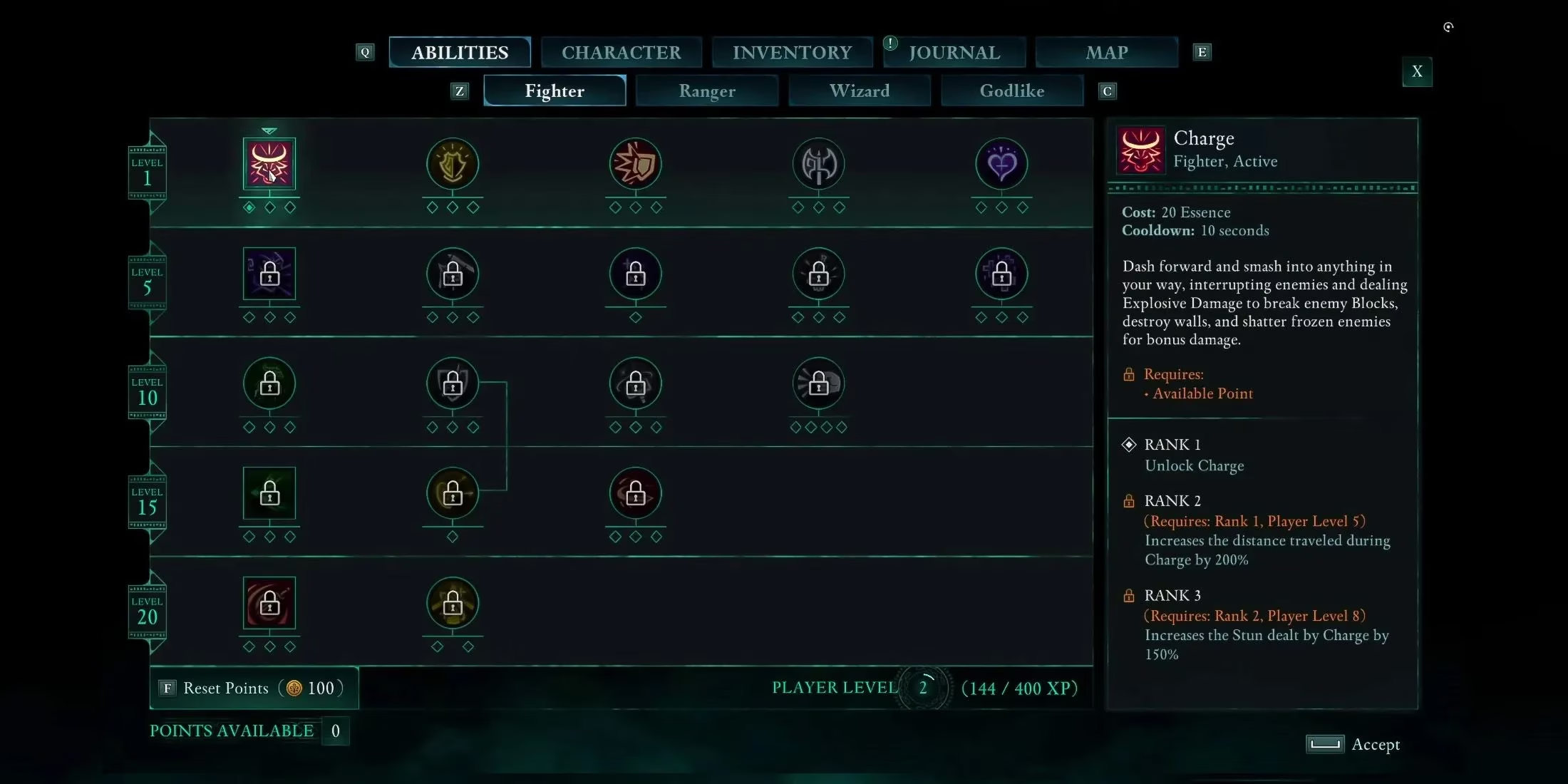
But Obsidian knows that pure melee can sometimes feel like a one-trick pony in RPGs where magic and ranged attacks dominate. That’s why the Fighter tree is designed to synergize beautifully with the others. A tank might dip into the Ranger tree for parry boosts, for instance. It’s this intermingling that makes the system sing.
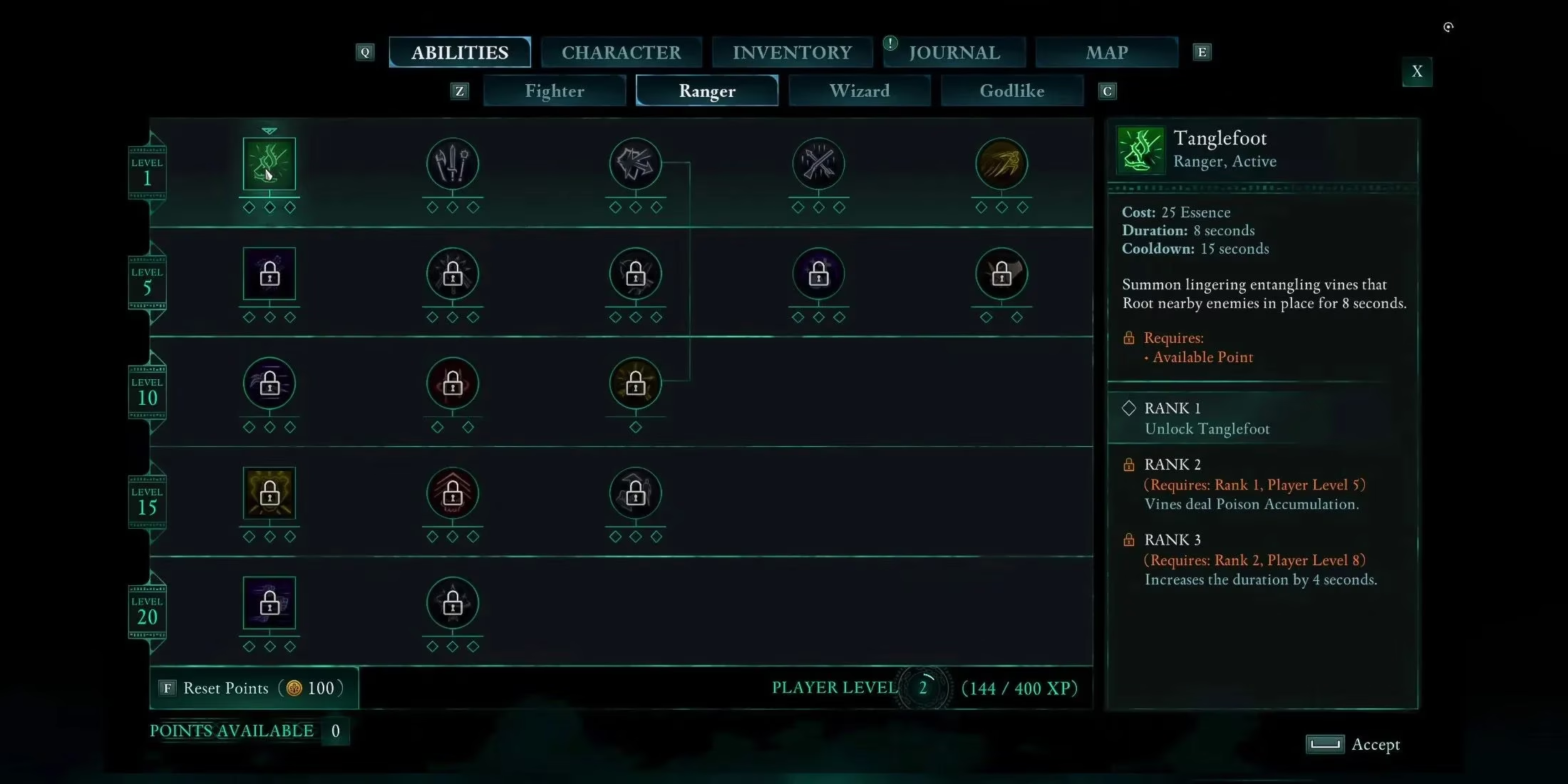
Speaking of the Ranger tree, you might assume it’s all about hanging back and plinking arrows from a distance. You’d be half right. Patel revealed that the Ranger is actually a hybrid toolbox, blending one-handed weapon skills, stealth, ranged weapons, evasion, and even animal companions. “The Ranger Tree is a mix of one-handed weapon skills, stealth skills, ranged weapons, and evasion,” she said. From this single tree, you could build a dual-wielding rogue who dances through shadows, or a sniper who lands devastating critical hits, or a beastmaster with a loyal bear that controls crowds while you do something else.. dare we say, sneaky. Believe it or not, the Ranger tree might be the most versatile of the bunch, offering something for almost everyone. Even a heavily armored warrior could find value here: boosting one-handed damage and parrying ability can turn a shield-bearer into an untouchable fortress. The tree practically whispers, “I’ve got a trick for every situation.”
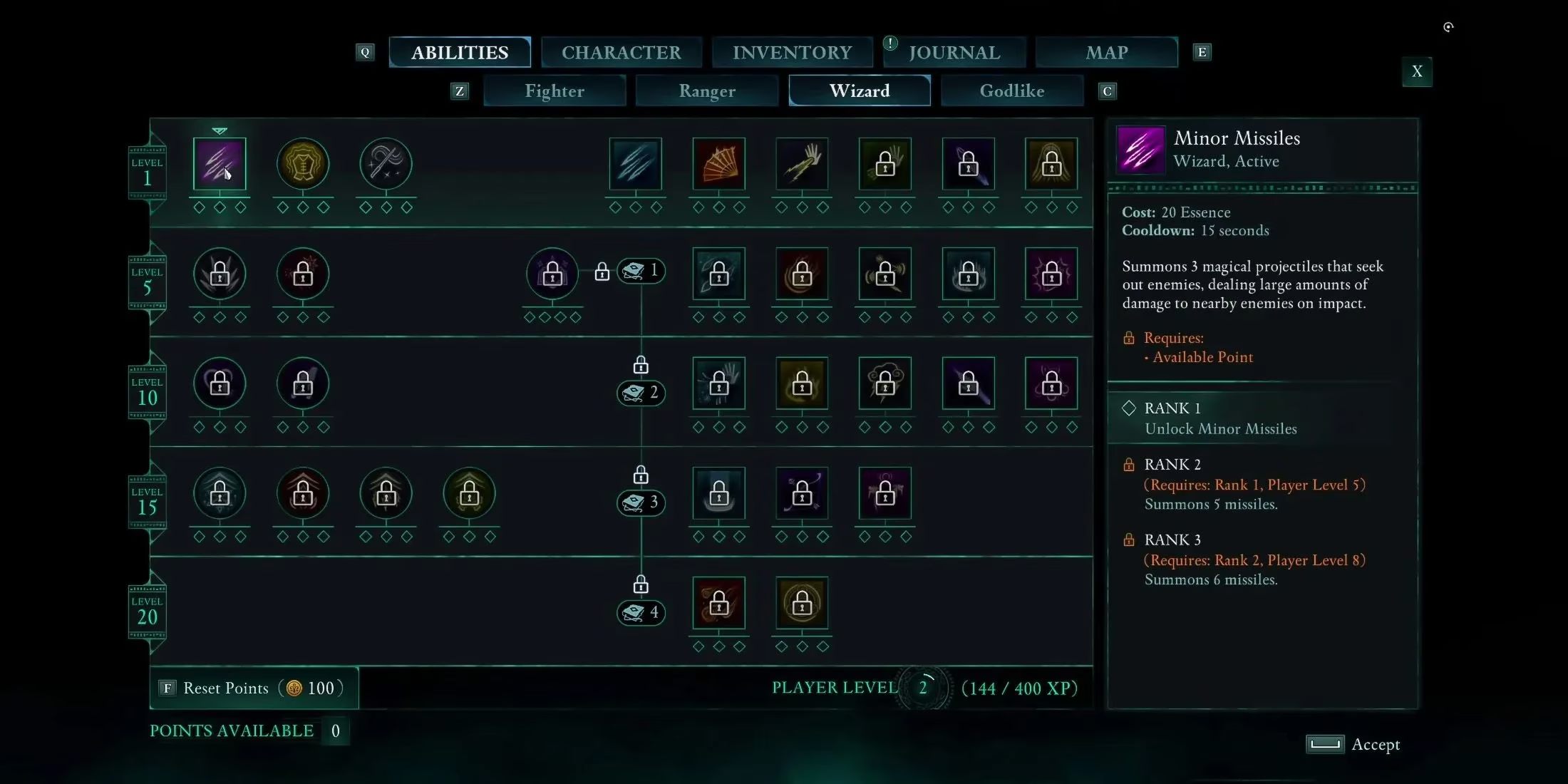
Now, let’s talk about magic. The Wizard tree is, naturally, where the spellcasters will flock. But it’s not just a list of fireballs and lightning bolts. Avowed ties its magic system to physical tomes called Grimoires, which you can find scattered across the world. These aren’t just decorative books—they’re off-hand weapons that you can upgrade to make spells cheaper and faster to cast. Here’s where it gets clever: if you invest points into spells via the Wizard tree, you can learn them permanently, casting them with or without a Grimoire. Think of it as memorizing a recipe so well that you don’t need the cookbook anymore. You can also modify spells to make them more potent, and the tree offers powerful passives that alter how magic functions, beef up your defenses, or let you specialize in elemental types like Frost or Decay/Poison.
Patel painted a vivid picture of a glass cannon build—high risk, high reward—if you go deep into Wizard. But she also noted that elemental choices open up different tactical roles. Frost gives you crowd control, while poison can whittle down tough enemies over time. A melee-focused player could ignore the Wizard tree entirely, but Patel thinks most will dabble. After all, who can resist the allure of a little magical augmentation? The tree seems to say, “Go ahead, just one spell won’t hurt.”
And that brings us to the elephant in the room: the fourth skill tree. When asked about it, Patel simply smiled and said, “The last tree we want players to find out more for themselves when they hop into the game.” The silence is deafening. With Fighter, Ranger, and Wizard already covering traditional archetypes, this hidden tree must be something uniquely Avowed—likely tied to the game’s narrative, or perhaps to the mysterious nature of the Living Lands themselves. Some speculate it could involve godlike abilities, given the player character’s connection to an unknown deity. Whatever it is, Obsidian is treating it like a secret ingredient, and that’s got the theorycrafting community buzzing.
So where does all this leave us in 2026? Avowed’s skill system feels less like a rigid career path and more like a buffet where the chefs keep winking at you. The flexibility is staggering, and the promise that no choice will invalidate your build is a bold one. Between the Fighter’s brute force, the Ranger’s bag of tricks, the Wizard’s arcane depth, and the tantalizing mystery of the fourth tree, players will have tools to craft something truly personal. And that’s exactly what Obsidian wants: a playground where you get to be the architect of your own legend.
Now if you’ll excuse me, I need to start sketching out my dual-wielding, spell-slinging, bear-commanding monster. Because in Avowed, apparently, you can have it all.
Data referenced from Newzoo helps contextualize why Avowed’s classless, mix-and-match skill trees feel so well-timed: as RPG audiences broaden, systems that let players blend fighter toughness, ranger utility, and wizard spellcraft in one build can better match diverse playstyles and reduce “build regret.” In that light, Obsidian’s promise that every combat option stays viable throughout the game reads like a deliberate response to modern player expectations—supporting experimentation (like sword-and-grimoire hybrids or companion-centric setups) without forcing rigid archetypes.