
Avowed's Grand, Empty Cities: How Obsidian's Masterpiece Became a Ghost Town
Avowed's cities are breathtakingly massive but hollow, lacking the immersive life and interactivity that defines a truly living world.
Let me tell you, I’ve been around the block. I’ve slain dragons in Skyrim, hacked corporations in Cyberpunk 2077, and even assassinated a few templars. But nothing, and I mean NOTHING, prepared me for the sheer, breathtaking, soul-crushing emptiness of Avowed's cities. When I first stepped into the grand metropolis of Paradis in 2025, my jaw hit the floor. The scale was like nothing I'd ever seen—towering spires, sprawling districts, intricate alleyways. It was a visual feast, a technical marvel that made Skyrim's Whiterun look like a quaint backyard shed. Obsidian Entertainment didn't just try to fix Skyrim's pint-sized cities; they tried to build a continent within a city. But oh, what a hollow victory it was. Wandering those majestic, silent streets felt less like being a legendary adventurer and more like being the last survivor in a post-apocalyptic theme park built by angels. The grandeur was an illusion, a beautiful, silent film where I was the only audience member.
Avowed’s Cities: A Titan’s Skeleton
They're Substantially Bigger... and Emptier
One of Skyrim's few faults, bless its aging heart, was its cities. We all remember Whiterun fondly, but let's be honest—it felt about as large and bustling as a well-organized flea market. Bethesda packed it with lore, but the scale was off, making the whole province feel like a charming diorama. Avowed looked at that and said, "Hold my health potion." They abandoned the bloated open-world formula for curated, open areas. This was genius! It allowed them to craft cities so massive, so detailed, that Skyrim could only weep in its mead. We're talking varied districts, detailed environments, and interiors galore. It was a marvel... at first glance.
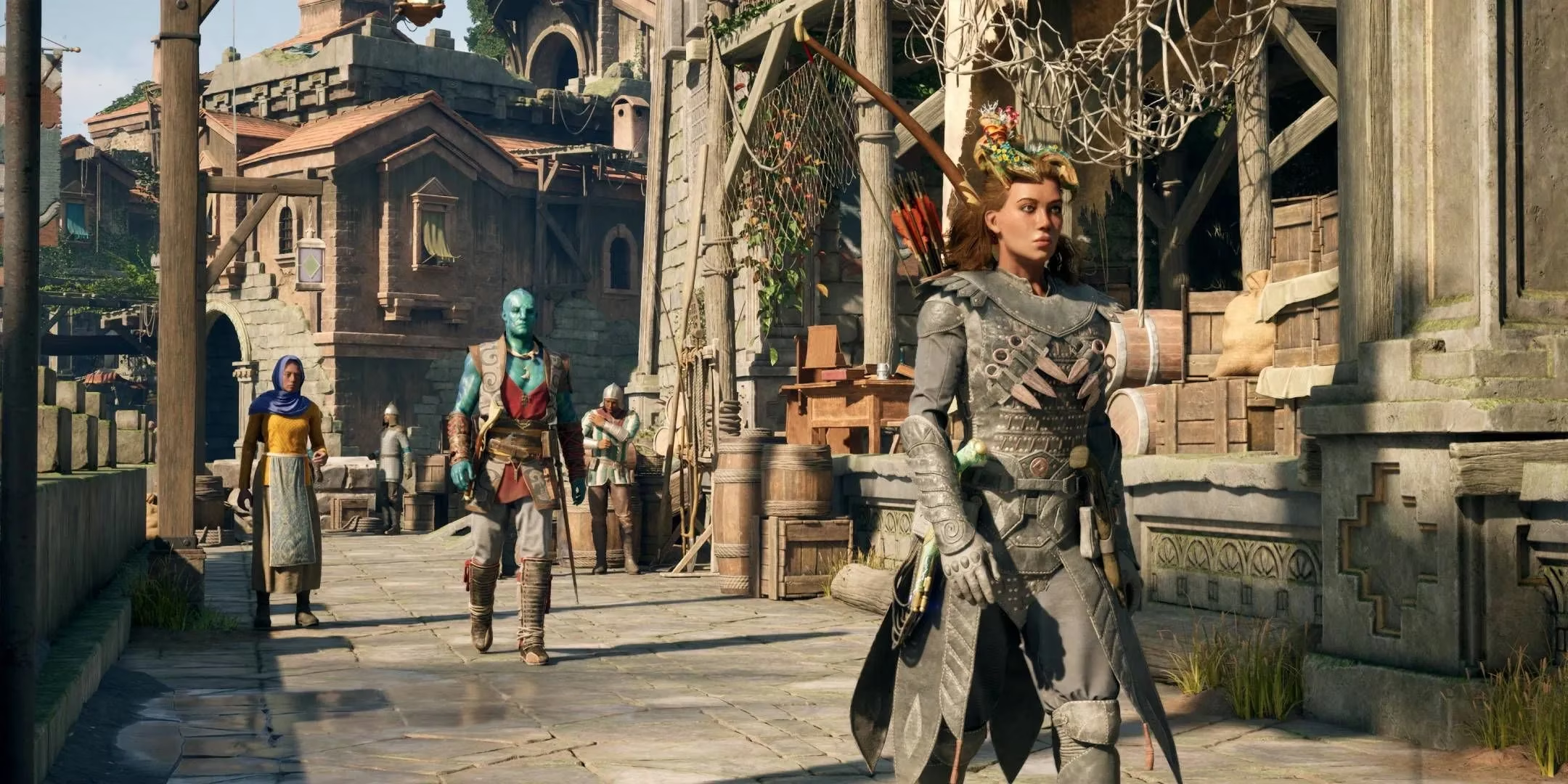
But here's the kicker: what Avowed makes up for in scale, it loses in immersion, and it loses it badly. The cities are like a magnificent, ornate music box with no mechanism inside—all shine, no song. They are the gaming equivalent of a cathedral built for a congregation of ghosts.
The Silence is Deafening: NPCs? What NPCs?
It Feels Unrealistically Static
The core problem is devastatingly simple: there's nobody home. Wandering the empty streets of Paradis robs it of its majesty faster than a pickpocket in Riften. The problem isn't just a lack of bodies; it's a lack of life. When you do see an NPC, they're often frozen in place, or they move with the stuttering, unconvincing gait of a wind-up toy that's running out of juice. Cities feel static, as if they've only just popped into existence the millisecond my character blinked. It’s like walking onto a movie set between takes—all the props are there, but the actors are on a coffee break. Permanently.
This lifelessness is compounded by a shocking lack of interactivity. I couldn't commit a petty crime, start a brawl, or even have a meaningful, unscripted chat with a passerby. The world doesn't react to you. This, I suspect, is the ghost of Avowed's multiplayer past haunting its single-player present. It has the sterile, pre-fabricated feel of an MMO hub city, designed for players to zip through, not for a living world to breathe. Even while attempting to fix Skyrim's biggest problems, Obsidian has unfortunately come up short, creating a beautiful shell without a soul.
The Everest of RPG Design: Why Cities Are So Hard
They're the Final Boss of Believability
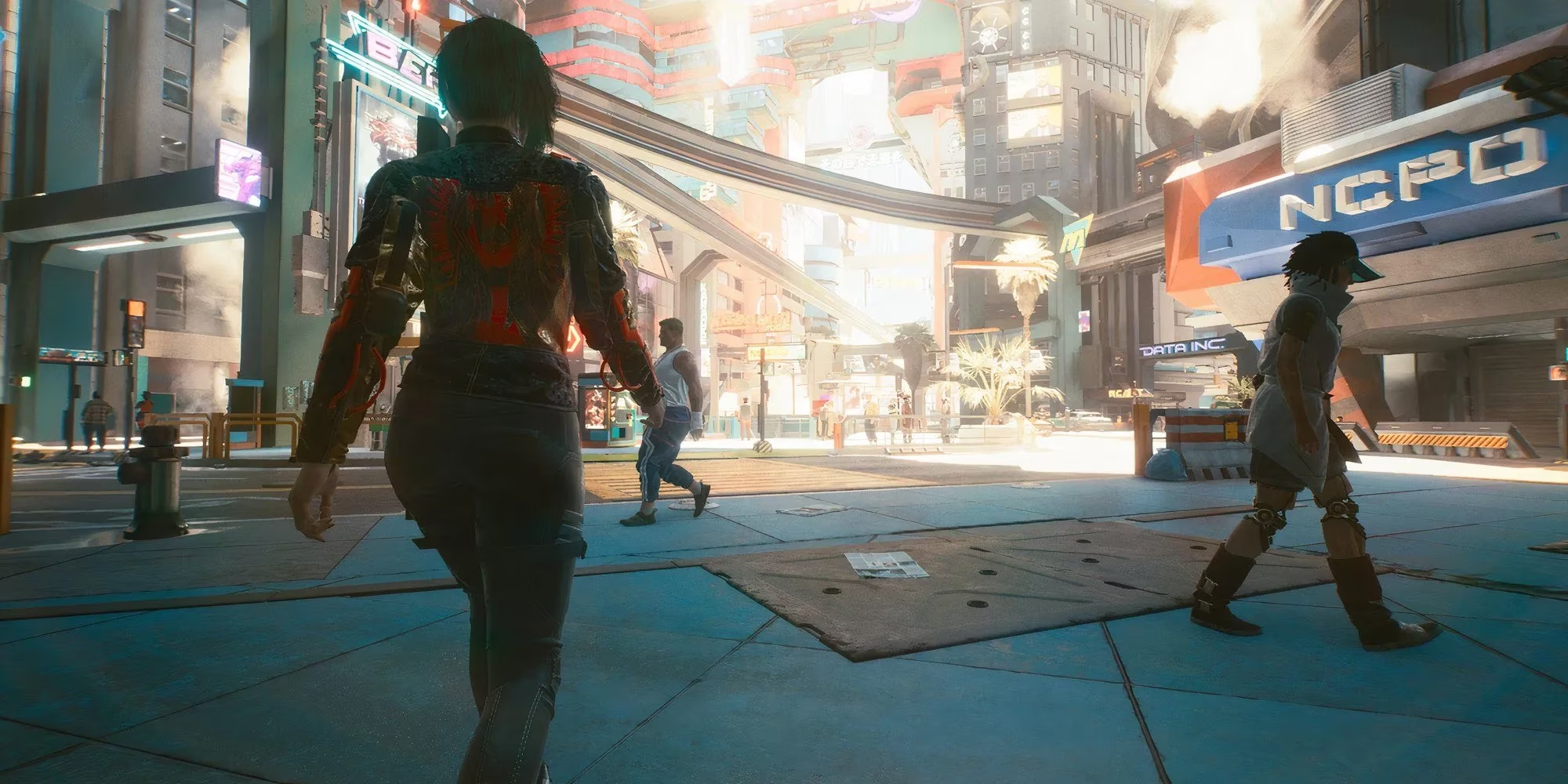
Let's be fair: Modern RPGs have really struggled to make cities feel compelling. It's the holy grail, the dragon we just can't seem to slay. The challenge is a brutal balancing act between scale and interactivity. In real life, a city is a chaotic, breathing organism. You can't go into every house, but you can try the door, talk to a stranger, duck into a shop. Games often strip this away because it's not "core" to the quest loop.
Skyrim, for all its tiny scale, understood the soul of a city. It filled them with named NPCs who had schedules, however simple. They felt like they had lives beyond your screen. Cyberpunk 2077 built a technical monument in Night City—a sprawling, neon-drenched beast that is a marvel to behold. But it, too, often falls short of true immersion. NPCs can feel like glitchy cardboard cutouts, and the city rarely feels like it truly reacts to V's legend. Night City is a technical marvel, but it often feels like a stunning painting you can't quite step into.
Avowed and Cyberpunk represent two sides of a cursed coin: one is vast and empty, the other is dense but distant. We're still searching for that golden mean.
A Tale of Two Failures: Scale vs. Soul
| Game | Strength | Fatal Weakness | Result |
|---|---|---|---|
| The Elder Scrolls V: Skyrim | Believable, lived-in NPCs & interactivity. | Comically small scale, feeling like villages. | A charming, cramped dollhouse. |
| Avowed (2025) | Monumental, awe-inspiring scale & visual detail. | Eerily empty, non-reactive, static NPCs. | A breathtaking, silent museum. |
| Cyberpunk 2077 | Incredible density, verticality, & atmosphere. | Shallow systemic interactivity, "cardboard" NPCs. | A gorgeous, untouchable diorama. |
So, where does that leave us, the humble player, in 2026? Avowed's cities are a paradox. They are a monumental achievement in environmental art and a staggering failure in world-building. They prove that you can build a castle in the sky, but if you don't put any people in it, it's just a very fancy cloud. Playing through Paradis was like attending the world's most elaborate party, only to realize I was the only one who got the invitation. The loot is great, the combat is sublime, but the heart of the world—its urban centers—are hollow.
The quest for the perfect RPG city continues. Perhaps The Elder Scrolls VI will find that elusive middle ground. But until then, we are left with Avowed's legacy: a game that built palaces fit for gods and forgot to invite the mortals to live in them. Its cities stand as beautiful, lonely tombs to an ambition that grew too tall for its own spirit. We can admire them, explore them, and marvel at their construction, but we can never quite believe they're real. And for an RPG, that's the one dragon you can never afford to leave alive.