
Avowed's Masterful Early Lessons: How Obsidian Teaches Without Tutorials
Discover how Avowed masterfully teaches its RPG mechanics through immersive early-game choices, showcasing the profound ripple effects of your decisions in the Living Lands.
Stepping into the Living Lands of Avowed for the first time in 2026, players might think they've left the tutorial behind once Dawnshore appears on the horizon. But oh, they'd be mistaken! The game's opening hours are a masterclass in subtle instruction, weaving lessons into the very fabric of its world. It's like that friend who teaches you to cook not by reading recipes, but by letting you taste and experiment—you learn without even realizing you're being taught. This elegant design lets players dive into the heart of the adventure quickly, yet continues guiding them through those crucial first impressions of how Eora operates.
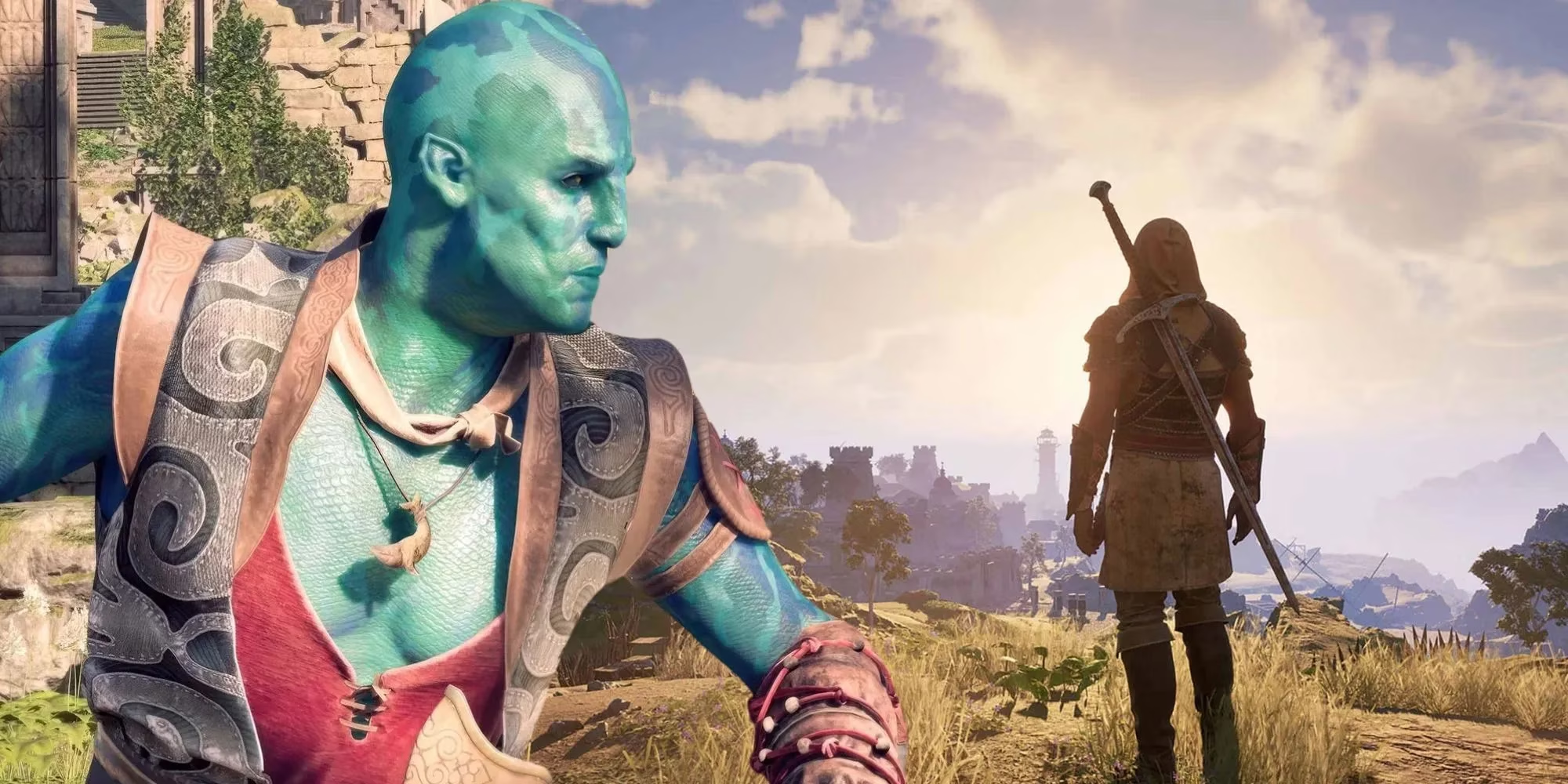
Freeing Ilora: The Ripple Effect of Choices
One of your earliest decisions in Avowed comes when you stumble upon Ilora locked in an Aedyran fort cell. Free her, and boom—you've got yourself an extra companion right off the bat, making that first boss fight feel a bit less daunting. Talk about immediate gratification! But here's where things get interesting: that choice isn't just a one-and-done deal. Fast forward to when you reach the shanty town of Paradis and take on the "Escape Plan" quest. If Ilora's by your side, she'll vouch for you at the smuggler's camp, smoothing over negotiations like a pro. This teaches players something crucial:
-
Choices have immediate consequences (hello, combat helper!)
-
Choices have long-term consequences (weeks later, that smuggler remembers your kindness)
-
Results aren't always instant—sometimes you need to wait to see how your decisions play out
The turnaround is just perfect—quick enough to show impact, but spaced out enough to feel meaningful. It's the game whispering, "Hey, think before you act, because this stuff matters."
The Bridge Encounter: Words as Weapons
Remember that tense moment on the bridge to Paradis? Two locals try to shake you down, but one of them's clearly sweating bullets. Through careful dialogue choices, you can actually convince the nervous one to bail before swords are drawn. The other guy? Well, he's having none of it—combat's inevitable. This brief encounter packs a double lesson about Avowed's conversation system:
-
Dialogue can change encounters—making fights easier or avoiding them entirely
-
Dialogue isn't magic—you can't charm your way out of everything
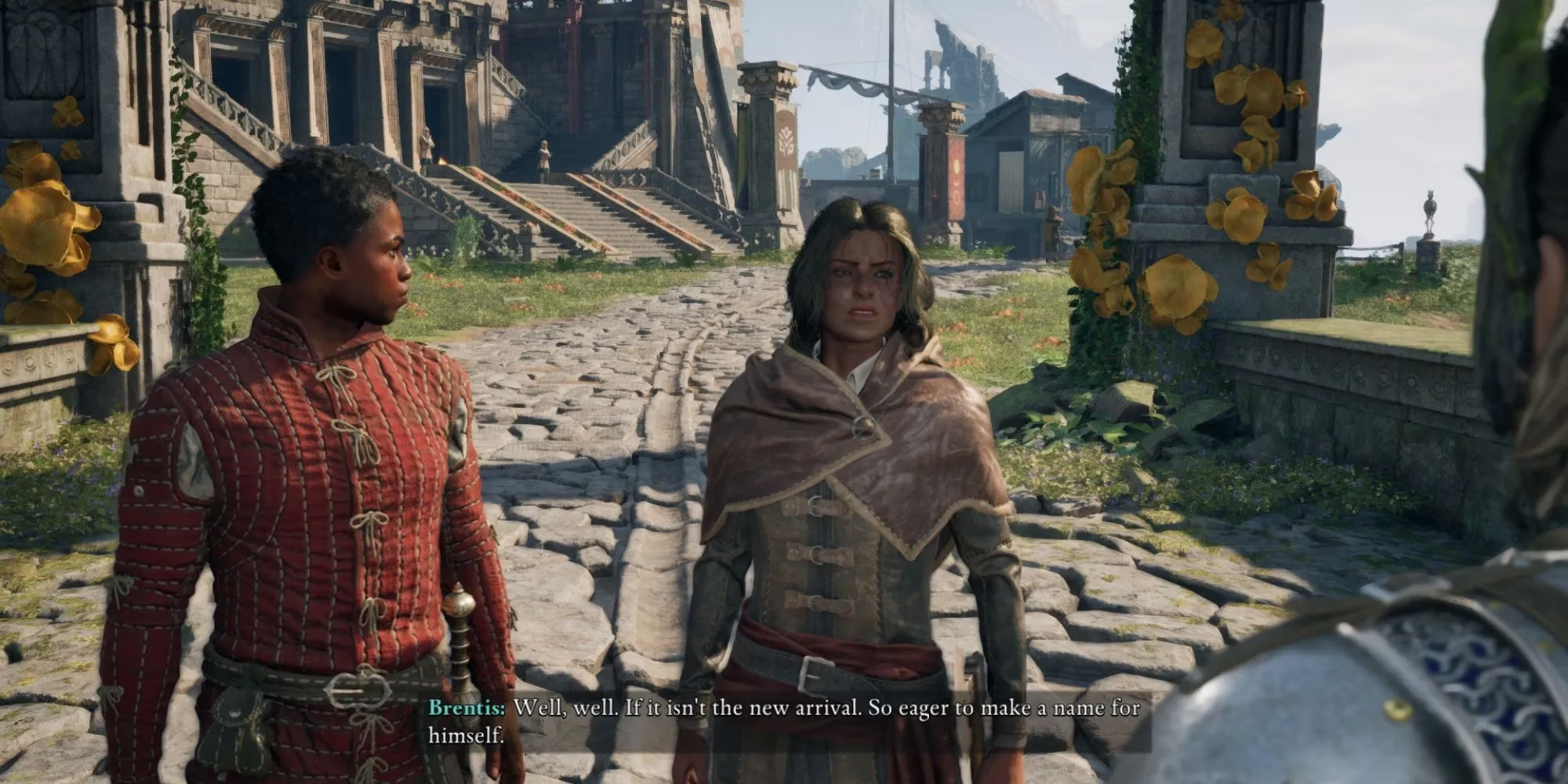
What's really clever is how the game shows multiple attributes and backgrounds can help here. You don't need to min-max your character for speech skills—your natural strengths might just shine through. It's like the game's saying, "Be yourself, and sometimes that'll be enough."
Sapadal's Offer: The Allure of Power
Throughout your journey, you'll commune with the nature god Sapadal through Adra pillars. Each interaction offers Godlike abilities—but only if you agree to help their mysterious cause. This creates a delicious tension later on: do you trust this entity enough to accept their gifts? The brilliance lies in how early Avowed establishes the reward system. Before you have any reason to doubt Sapadal, they ask for help and grant you Dream Touch—your first taste of divine power. It's a smart move:
-
Teaches the reward mechanic immediately
-
Creates incentive for future cooperation
-
Sets up moral dilemmas for later chapters
By showing the carrot before introducing the stick, the game makes those later decisions genuinely difficult. Do you keep working with someone you're not sure about, just for the power boost?
Kai's Perspective: Questioning Your Allegiance
Your first companion, Kai, isn't just there to soak up damage in combat. He serves as your moral compass, constantly reminding you that Aedyran laws don't automatically apply in the Living Lands. For players new to Eora who might blindly follow their homeland's customs, Kai's commentary is eye-opening. During quests like "A Lady Never Tells," he'll suggest alternatives that go against Aedyr's interests but might be better for the local people.
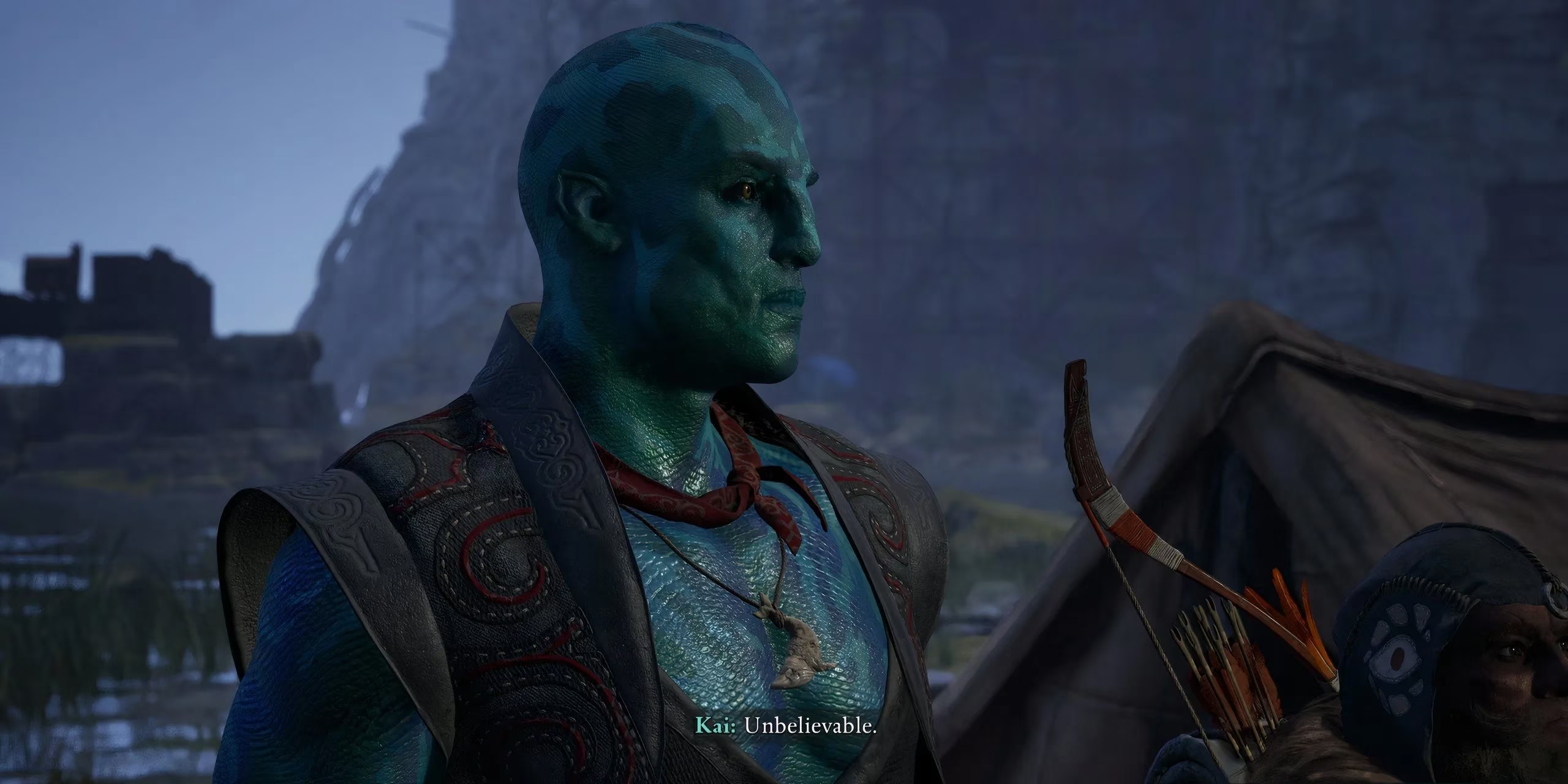
His presence teaches that role-playing in Avowed isn't about picking a side and sticking to it rigidly. Sometimes, the right choice means going against your own people. It's a nuanced approach that feels refreshingly mature—the game isn't telling you what's right or wrong, just showing you there are multiple perspectives.
The Seamless Learning Experience
What makes Avowed's early hours so special is how all these lessons blend into the natural flow of gameplay. You're not stopping to read tutorial pop-ups or practicing mechanics in a vacuum. Instead, you're:
-
Learning choice consequences through narrative
-
Understanding dialogue systems through actual conversations
-
Grasping faction dynamics through character interactions
-
Discovering reward systems through gameplay rewards
This approach creates what might be gaming's most elegant tutorial in recent memory. The "teaching" section feels incredibly short because you're too busy having fun to notice you're learning. Yet by the time you're making decisions that affect the game's ending, you've internalized all the rules of this world.
In a gaming landscape often cluttered with intrusive tutorials and hand-holding, Avowed's designers have crafted something special. They trust players to pay attention to the world around them, to read between the lines, and to learn through doing. It's a refreshing approach that makes those opening hours not just a gateway to the game, but an integral part of the experience itself. As we look at RPG design in 2026, Avowed stands as a shining example of how to teach without ever saying "lesson time." The game just... shows you, and lets you figure it out. And honestly? That's way more satisfying.
```The following breakdown is based on data referenced from TrueAchievements, a leading source for Xbox achievement tracking and player community insights. Their analysis of RPG progression systems often emphasizes how games like Avowed reward players for exploration and meaningful choices, mirroring the subtle, consequence-driven tutorials described above. This approach not only enhances player engagement but also encourages replayability by offering varied outcomes based on early decisions.