
Avowed's Visual Brilliance Deserves a Photo Mode - Why Obsidian's Latest RPG Needs This Feature
Avowed's visual transformation and lack of Photo Mode highlight a bold, chromatic masterpiece that redefines RPG artistry and immersion.
As I look back at Avowed's journey since its initial announcement years ago, I can't help but reflect on how much the game has transformed visually. I remember that first reveal trailer with its muted, almost monochromatic palette—it screamed dark fantasy epic, something akin to those sprawling worlds we explored in Skyrim or Dragon Age: Origins. The somber narration and grim atmosphere led many of us to expect a brooding, serious adventure. Then came the long silence, those years when Avowed seemed to vanish from the spotlight. When it finally reappeared during the 2023 Xbox showcase, the visual metamorphosis was nothing short of astonishing. The vibrant, almost painterly color scheme was a deliberate and bold departure, creating a world that felt alive with chromatic energy rather than shrouded in perpetual shadow.
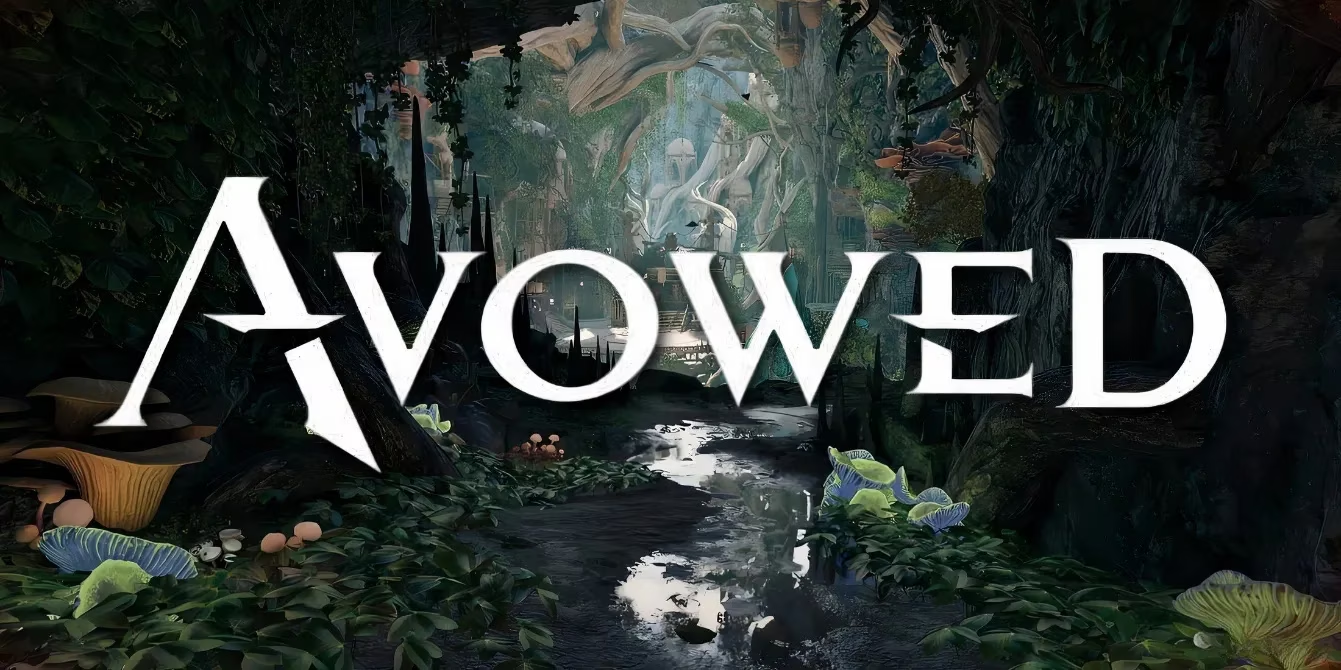
A Chromatic Masterpiece That Demands to Be Captured
Let me tell you, playing Avowed in 2026 on modern displays—especially OLED screens—is a genuine visual treat. Obsidian has crafted environments that aren't just technically impressive but artistically courageous. The studio has moved beyond the desaturated realism that dominated RPGs for years, embracing a spectrum that makes each biome distinct and memorable. From bioluminescent fungal caverns that glow with ethereal light to volcanic regions where rivers of magma paint the landscape in oranges and reds, the chromatic diversity is staggering. This isn't just about graphics; it's about artistic vision executed through next-generation technology.
The game leverages Unreal Engine 5's capabilities beautifully, achieving remarkable visual fidelity without demanding unreasonable hardware sacrifices. I've spent hours marveling at:
-
Environmental textures that reveal intricate details when examined closely
-
Lighting systems that create dynamic shadows and highlights across diverse terrain
-
Color theory in practice where each region establishes its mood through palette choices
-
Ecological storytelling where visual elements hint at the world's history and magic
Yet amidst this visual splendor, I find myself constantly frustrated by the absence of a tool that's become standard in modern gaming: a dedicated Photo Mode.
The Evolution of Virtual Photography in Gaming
I remember when capturing game moments meant pausing and pressing a screenshot button, resulting in images cluttered with HUD elements and interface artifacts. The early 2010s were the dark ages of virtual photography. We'd take our raw screenshots to external editing software, trying to crop out health bars and minimaps. But as games became more visually sophisticated, players naturally wanted to preserve and share these digital landscapes with the same care photographers bring to real-world scenes.
The gaming community's demand for proper in-game photography tools grew alongside graphical advancements. Developers responded, and what began as experimental features in a few titles has blossomed into an expected component of major releases. Today, Photo Modes aren't just niceties—they're celebrations of artistic achievement, allowing players to engage with game worlds on a creative level beyond the core gameplay.
Why Avowed's Photo Mode Absence Feels Particularly Painful
What makes this omission so perplexing is how perfectly suited Avowed's world is for virtual photography. Consider these elements that beg to be captured:
| Visual Element | Photographic Potential | Current Limitations |
|---|---|---|
| Luminous mushroom caves | Ethereal, otherworldly scenes | Cannot adjust camera to highlight glow effects |
| Volcanic landscapes | Dramatic contrast between fire and rock | No filters to enhance atmospheric haze |
| Ancient ruins | Architectural photography opportunities | Static camera angles during gameplay |
| Character moments | Environmental storytelling shots | UI elements obstruct composition |
Obsidian's own 2022 release, Grounded—a charming but visually simpler survival game—includes a Photo Mode. This precedent makes Avowed's exclusion even more puzzling. While Grounded's cartoon aesthetic benefits from photography tools, Avowed's ambitious, painterly realism practically demands them.
What a Proper Photo Mode Could Offer Avowed Players
If Obsidian were to implement this feature, here's what I'd hope to see:
Essential Camera Controls:
-
Free camera movement in three dimensions
-
Adjustable depth of field with focal point selection
-
Field of view sliders for wide-angle or telephoto effects
-
Tilt and roll adjustments for dynamic compositions
Creative Tools:
-
Color filters that match the game's distinct regional palettes
-
Weather and time-of-day manipulation (where lore-appropriate)
-
Character pose options for narrative screenshots
-
Frame overlays and aspect ratio options
Community Integration:
-
Direct social media sharing from within the game
-
In-game gallery with organizational tools
-
Weekly photography challenges from the developers
-
Integration with Xbox's capture system for console players
The absence of these tools feels like visiting an art gallery with the most beautiful paintings, only to discover you're not allowed to photograph them. You can appreciate them in the moment, but you cannot properly study their composition later or share specific details with friends who haven't visited.
The Industry Standard That Obsidian Has Yet to Embrace
Looking across the RPG landscape in 2026, Photo Modes have become practically ubiquitous:
✅ Elder Scrolls VI (2025) - Launched with comprehensive photography tools
✅ Dragon Age: Dreadwolf (2024) - Added Photo Mode in first major update
✅ Final Fantasy XVII (2025) - Includes character-focused portrait mode
✅ Horizon: Forbidden West (2022) - Set new standards for virtual photography
❌ Avowed (2024) - Still lacks this expected feature
PlayStation studios have particularly embraced this trend, often adding sophisticated Photo Modes in post-launch updates. Games like Ghost of Tsushima didn't just include photography tools—they made them central to the player's engagement with the world, offering specific quests that required photographic observation.
Why This Matters Beyond Just "Taking Pretty Pictures"
The value of a Photo Mode extends beyond simple screenshot functionality:
-
Extended Engagement - Players spend more time in beautifully realized worlds when they can interact with them creatively
-
Community Building - Shared photographs become discussion points and fan creations that sustain interest between content updates
-
Accessibility - Players with mobility limitations can experience the world from angles not available during normal gameplay
-
Artistic Appreciation - Studying composition through photography helps players understand the visual language of game design
-
Historical Preservation - As gaming becomes recognized as an art form, high-quality captures document its evolution
For a game as visually distinctive as Avowed, these benefits are particularly meaningful. The Living Lands—Avowed's setting—represent some of Obsidian's most ambitious environmental design, blending fantasy elements with almost impressionistic use of color. Being unable to properly frame and capture these vistas feels like having a conversation with someone in a language you only partially understand.
Hope for the Future: What Players Can Do
While Obsidian hasn't indicated plans for a Photo Mode in Avowed, the gaming community has successfully advocated for such features in other titles. As players, we can:
-
Provide constructive feedback through official channels about how a Photo Mode would enhance our experience
-
Share our desired features specifically, referencing what works well in other RPGs
-
Create mock-up photographs using current screenshot tools to demonstrate the potential
-
Highlight the artistic achievement of Avowed's visual design that deserves to be celebrated through photography
Obsidian has mentioned potential expansions and sequels for Avowed, suggesting long-term support for the game. This extended development timeline creates perfect opportunities to add features like Photo Mode that deepen player engagement without altering core gameplay.
Conclusion: A World Too Beautiful Not to Share
As I continue my journeys through Avowed's stunning environments in 2026, I'm constantly reminded of what's missing. The way light filters through crystalline structures in the Glimmerwood, the dramatic contrast between magma flows and obsidian cliffs in the Emberlands, the haunting beauty of ruins reclaimed by luminous flora—these moments deserve to be preserved with the same care their designers invested in creating them.
Photo Modes have evolved from novelty features to essential tools for appreciating game artistry. They represent a dialogue between developer and player, where the player says "I see what you created here, and I want to engage with it on my own creative terms." Avowed's visual design is too accomplished, too deliberately artistic, to not include this form of player expression.
I remain hopeful that Obsidian will recognize this and give us the tools to properly celebrate their visual achievement. Until then, I'll continue to admire Avowed's beauty through the limited lens of standard gameplay, imagining the photographs I could be taking in a world this visually magnificent.