
The Allure of Magic in Avowed: Why Wizards Rule the Battlefield in 2026
Avowed RPG and Wizard build deliver an electrifying, immersive experience—unleash dynamic magic for the most thrilling gameplay yet!
As I stepped into the vibrant, perilous world of Avowed back in 2025, I expected to fall into my usual routine: find the biggest hammer and start swinging. After all, that's my go-to in most RPGs—simple, satisfying, and hard to mess up. But Avowed had a different plan for me. From the moment I opened the skill tree and saw those three familiar paths—Fighter, Ranger, and Wizard—I felt a nudge to break my own habits. This wasn't a game about picking a class and sticking to it rigidly; it was an invitation to experiment, to blend, and to discover. Little did I know that this journey would lead me to a revelation: in Avowed, embracing the path of the Wizard isn't just an option; it's the most thrilling way to experience the game. The freedom to weave magic into the heart of combat, to feel the raw power crackling at your fingertips, is what sets this adventure apart from its peers.
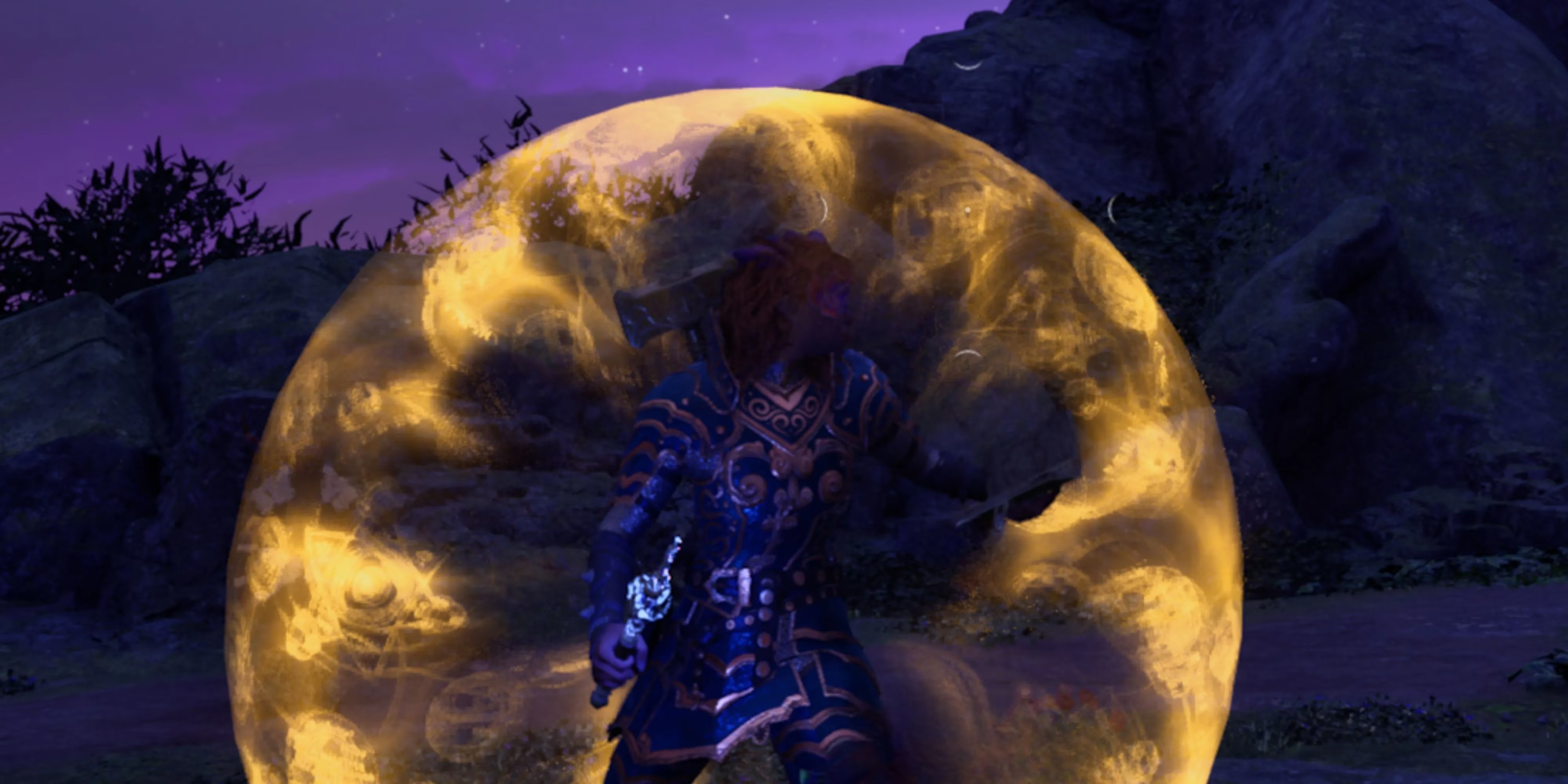
My early hours were a chaotic experiment. I tried everything! 🛡️⚔️
-
Phase 1: The Traditionalist – I began with a spear and shield, a classic, defensive Fighter setup.
-
Phase 2: The Collector – Soon, my inventory was a cluttered arsenal: greatswords, hatchets, wands, grimoires, bows, and even a couple of peculiar firearms.
-
Phase 3: The Hybrid – I eventually settled on a primary loadout of wand and spear, keeping a massive two-handed weapon on standby for when things got truly messy.
This constant shifting was new for me. Where I'd normally just upgrade my trusty hammer for a shinier model, Avowed's fluid progression encouraged true build-crafting. The wand, Minoletta's Conduit, became an extension of my will. While it was technically leveled in the Wizard tree, it felt less like a mystical focus and more like a relentless, recharge-less pistol—a 'pew pew stick' that could electrify puddles and keep foes at bay. Yet, this was just the surface of the magical iceberg.
The true epiphany came when I fully committed to the Grimoire. These ancient tomes are the key to unlocking Avowed's most spectacular and empowering spells. The system can be initially perplexing:
| Concept | How It Works in Avowed |
|---|---|
| Learning Spells | You can learn first-tier spells via skill points OR by finding and equipping Grimoires. |
| Spell Lock-Out | As you progress, some Grimoires may prevent you from casting certain spells you know. |
| The Key | You must also invest skill points into your Grimoire skills in the Wizard tree to master higher-tier magic within a specific tome. |
Once this synergy clicked, everything changed. I was no longer a fighter who occasionally cast a spell; I was a battlefield conductor. I could hurl a fireball to coat the ground in searing flames, then use a vortex spell to pull a horde of enemies into the inferno. I could spray paralyzing poison into a captain's face while my other hand thrust a spear forward, keeping me safe. The pinnacle was chain lightning—a single bolt that would leap from foe to foe, leaving a chorus of crackling, stunned bodies in its wake. The pace was frantic, the combinations endless, and the feeling was pure, unadulterated power.
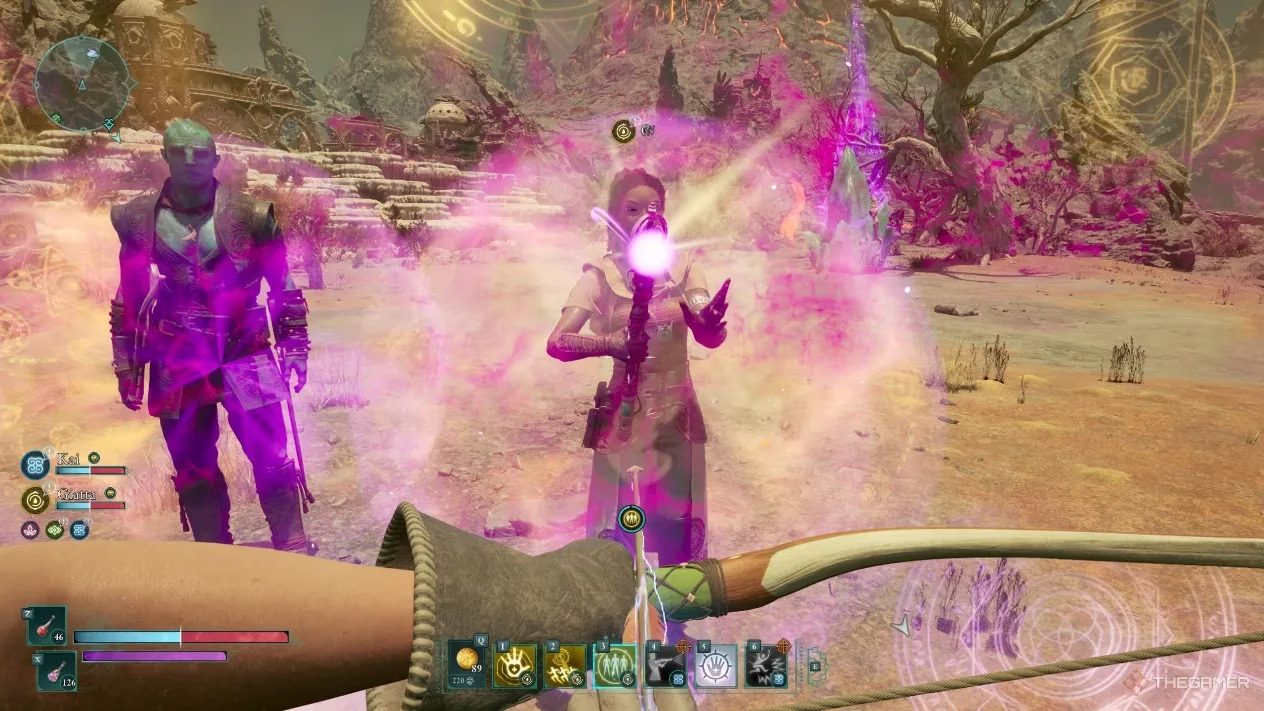
This is where Avowed truly shines in the modern RPG landscape. Many contemporary games struggle to integrate magic into fast-paced, action-oriented combat. They often relegate it to a supportive or overly complex role, making warriors and rogues feel like the 'main characters' of the fight. Let's compare it to other recent titans:
-
Dragon's Dogma 2: Its Mage and Sorcerer vocations can feel surprisingly passive. While specializations like Magick Archer are fun, they often feel like 'Rangers with magic glitter' rather than true masters of the arcane.
-
Dragon Age: The Veilguard: Sadly, this entry diluted its magical identity. Many players found that only the Spellblade specialization (a magic-warrior hybrid) made a Mage feel actively engaged in the visceral combat, losing the distinct, spectacular flavor of pure spellcasting.
Avowed sidesteps these pitfalls. It respects magic. It doesn't just give you a mana bar (here called Essence) and call it a day. It balances the resource management by tying powerful melee attacks to stamina, putting magical and physical prowess on a level playing field. Most importantly, it puts the Wizard on the frontlines. You are not a glass cannon hiding behind allies; you are in the thick of it, spells flowing as fluently as sword strikes, your grimoire in one hand and a weapon in the other. The spectacle is immediate and visceral.
Looking back from 2026, Avowed's legacy in action-RPG design is becoming clear. While turn-based classics like Baldur's Gate 3 have always celebrated strategic spellcasting, the shift to real-time combat often left magic feeling sluggish or sidelined. Some developers, in pursuit of frictionless action, stripped away the inherent complexity and wonder of spells, leading to homogenized combat where every style feels similar. Avowed dared to be different. It proved that magic could be fast, powerful, deeply customizable, and central to the action. It made casting a fireball feel as impactful and satisfying as landing a critical hit with a greathammer. In a world of chosen ones and legendary warriors, Avowed reminded us that sometimes, the most heroic thing you can be is a Wizard with a spear, ready to rewrite the rules of the battlefield.