
The Delicate Art of Not Letting Players Sleep on Their Swords: Avowed’s Combat Balancing Act
Avowed's combat balance ensures firearms, melee, and magic are all viable situationally, nudging tactical swaps without forcing them.
In the fantasy realm of Eora, where sentient mushrooms might judge your life choices and magic crackles in the air like static before a thunderstorm, Obsidian’s Avowed has made a bold promise: pick up any weapon—or spellbook—and it won’t suck. By 2026, the community has dissected every nuance, and the consensus is in: the developers didn’t just balance combat; they turned it into a delightful game of tactical musical chairs. Anyone who glimpsed an early gameplay snippet knew there was a bonanza of combat options, from arquebuses that boom like overdue apologies to grimoires that let you hurl miniature suns. The worry was inevitable—would one approach became the obvious choice, turning the rest into museum pieces? Obsidian’s response was essentially, “Hold my health potion.”
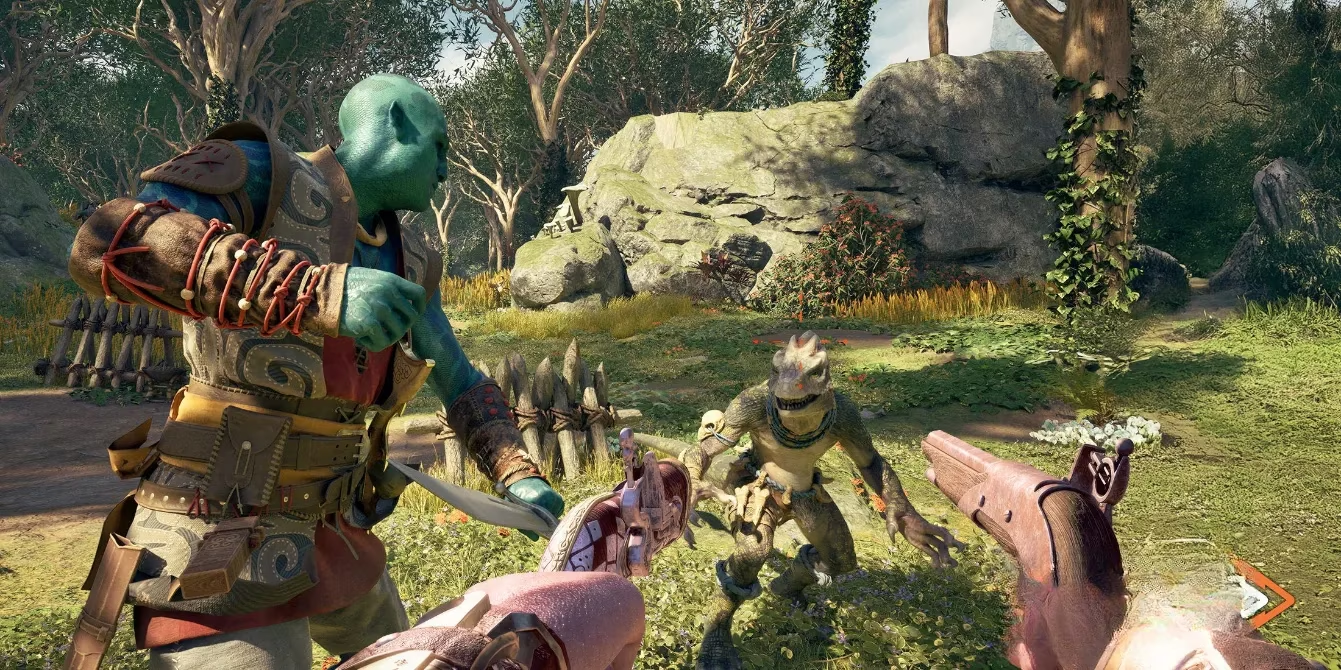
Game director Carrie Patel, in a conversation that felt less like a developer interview and more like a masterclass in keeping players on their toes, laid bare the philosophy: every weapon, spell, and ability must always be viable, and in the right circumstances, situationally best—yet never always best or always worst. That is a high-wire act. Imagine a chef telling you that every dish in the restaurant is perfect, but only for a specific mood. That is Avowed’s approach. If you adore a colossal great axe and want to solve every problem by pretending it is a tree-chopping simulator, you can. It will be incredibly effective against slab-shielded soldiers who politely stand there waiting to be cleaved. Then, reality bites.
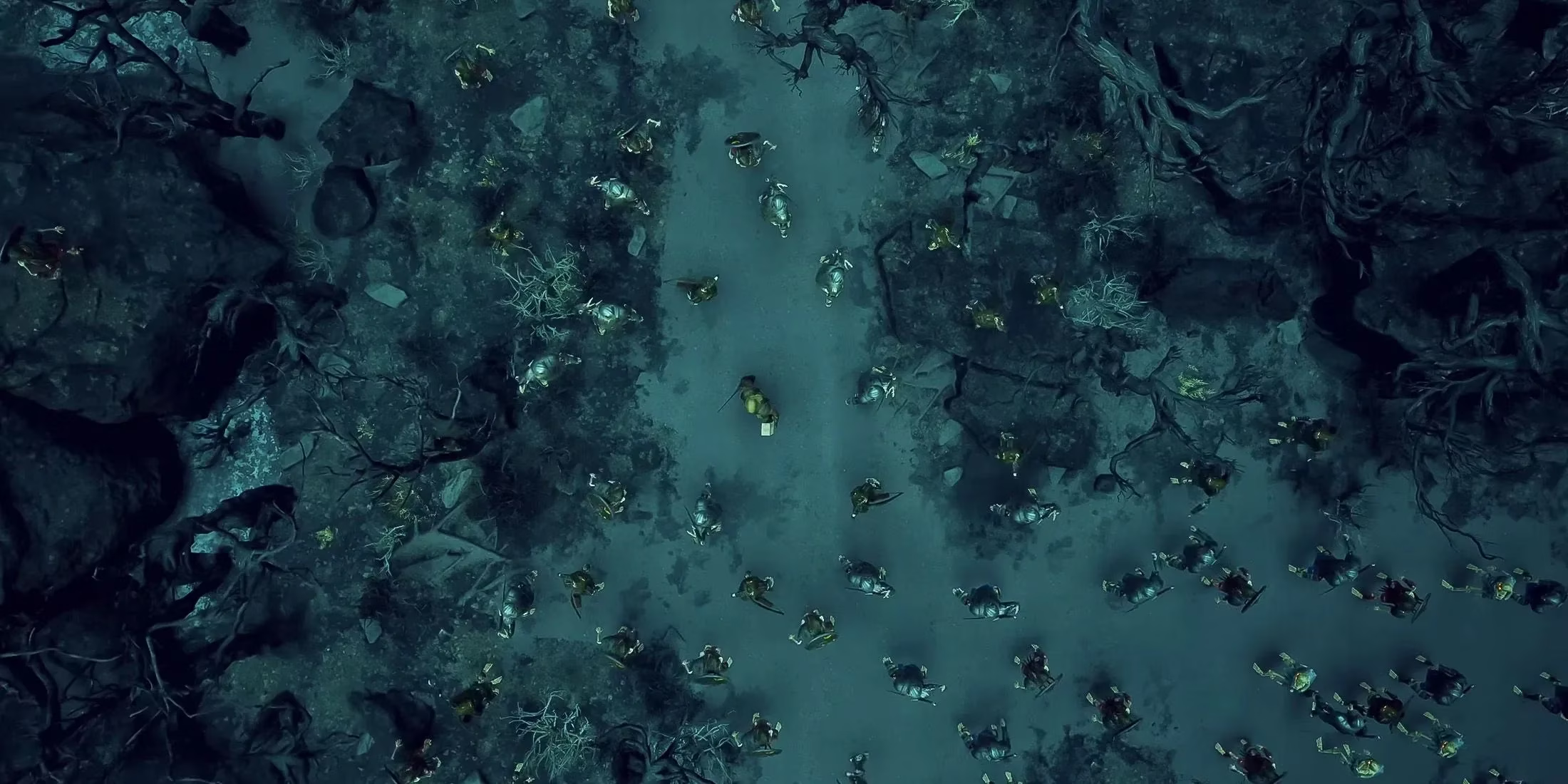
A swarm of Xaurips—lizardy little menaces who reproduce more enthusiastically than rabbits on caffeine—will teach you humility. They flood in from all sides, and suddenly your beloved arquebus feels about as useful as a butter knife at a dragon roast. That is when the game’s teeter-totter kicks in. Fan of Flames whooshes out, roasting the whole pack. A well-aimed grenade turns them into confetti. Or, if you are stubbornly melee, you might swing a two-handed sword in a wide arc, praying that your wizard companion casts something besides a snarky remark. The image below captures that exact “oh no” moment perfectly.
What makes this sing is not coercion—it’s gentle nudging. Patel noted that players who want to optimize will occasionally swap weapons, but they should never feel they have to. That is a lie we all love to believe. In practice, your brain will start calculating risk the moment an enemy mage atop a cliff starts channeling a fireball the size of a cottage. You could stand there with your rapier and shout insults, or you could pull out a wand and counter-spell like a dignified enchantment duelist. The game never forces the choice; it just makes the alternative look like an exercise in creative self-sabotage.
Dual-wielding adds an entire layer of spaghetti-western absurdity. One moment you are a knight in shining plate; the next, you are holding a pistol in one hand and a flaming sword in the other. That is either the coolest visual or an OSHA violation awaiting its citation. Because you can mix and match, the situational switcheroo becomes seamless. A long-reload firearm in your left hand, a fast dagger in your right: you can pop off a devastating shot, then dance in close while the enemy is still wondering where its internal organs went. The system practically dares you to experiment, and the game world—from the lush Living Lands to its beast-infested dungeons—rewards curiosity with survival.
The beauty, in 2026 hindsight, is how Avowed sidesteps the “meta” trap. No YouTube guide titled “THE ONLY BUILD YOU NEED” can truly dominate, because the encounters refuse to stay static. Some areas favor ranged magic that pierces armor; others demand the blunt-force trauma of a great hammer. Enemy types shuffle like a deck of cards: shield-beares, glass-cannon casters, swarming hordes, and solitary juggernauts. Attempting to clear the game with just one setup is possible—players have proved it—but it often feels like trying to eat soup with a fork. You can do it, yet everyone will silently judge you.
Let’s illustrate this situational chessboard with a quick table, shall we?
| Situation | Suggested Weapon/Spell | Why It Shines |
|---|---|---|
| Swarm of small baddies | Fan of Flames, grenade, two-handed sword | Area-of-effect clears the dance floor |
| Armored knight duo | Arquebus headshot, magic missiles | Pierce through or bypass that chunky shell |
| Elevated archers | Bow, long-range spell, arquebus | Counter-snipe before you become a pincushion |
| Fast, dodge-happy foes | Dual daggers, pistol parry | Speed meets speed in a ballet of death |
| Big solo boss | Great axe, corrosive magic | Heavy hits or DoT melt while you dodge telegraphed slams |
Of course, the table is not a holy decree. Some players in 2026 proudly boast completing the entire campaign using only a legendary rolling pin they found in a baker’s cellar. That is the point: obsession is permitted, but adaptation is celebrated. Obsidian’s design ensures that every playstyle has its moment in the sun, even if that moment is fleeting. The “teeter-totter” effect—constantly moving back and forth between options—becomes a rhythm, not a chore.
Crucially, companions fill the gaps. If you insist on hugging your arquebus while being swarmed, Kai or Giatta might deploy a freezing field or a healing wave to buy you breathing room. The party system acts as a safety net, allowing stubborn players to remain static without face-planting every fight. But the thrill-seeker who swaps tools mid-combo gets a dopamine hit the size of a Xaurip war party. The sound design alone—the crack of a pistol, the fwoosh of a fire spell, the crunch of a great axe—makes switching a sensory feast.
By 2026, Avowed has proven that “balance” isn’t about making everything equally bland. It is about ensuring that every tool has a voice in the choir, even if some sing louder in certain tunes. The game never scolds you for having a favourite weapon; it simply leans over your shoulder and whispers, “You know, a grenade might be neat right now.” And you know what? It usually is.