
Why Letting Fior Burn in Avowed Creates a Better Story (Spoilers Alert!)
The 'Steel Resolve' quest in *Avowed* presents a compelling narrative dilemma, where letting Fior burn creates a richer, more dramatic story than a perfect outcome.
Let's talk about one of the most fascinating narrative choices in Avowed. 🤯 As a player who loves diving deep into RPGs, I'm always torn between getting the 'best' outcome and following the most compelling story. And here's the thing: in Avowed, sometimes the most powerful story comes from your biggest failure. I'm talking about the quest 'Steel Resolve' in the Emerald Stair region. Completing it perfectly can save the city of Fior mes Ivèrno from total destruction when the villainous Steel Garrote attack. But what if I told you that, from a pure storytelling perspective, letting Fior burn to the ground actually makes for a richer, more dramatic, and emotionally resonant experience? 😮 This isn't about what's best for the characters (it's definitely worse for them!), but about what makes the narrative beats hit harder. Let me break down why this 'failure' is a narrative masterpiece.
✨ Fior's Destruction is The Envoy's First Real Gut Punch
Before the Emerald Stair, the Envoy's journey feels somewhat contained. You're figuring out who tried to kill you, navigating Paradis... the stakes feel personal, but not world-shattering. You're largely successful, and even setbacks feel manageable. This makes the utter devastation of Fior a perfect narrative turning point. 🎬 Up until this moment, there's little major harm you can truly cause. The consequences of your actions feel small. But watching an entire city burn on your watch? That's the Envoy's first true, catastrophic failure in the Living Lands. It's a brutal wake-up call to the harsh reality of your mission and the weight of your choices. Saving Fior, while rewarding gameplay-wise, lessens this emotional impact. You walk away confident you did your best. But letting it burn? That guilt, that sense of responsibility, that failure—it fundamentally changes the Envoy's character arc and adds immense dramatic weight.

🦹 The Steel Garrote Become Truly Terrifying Villains
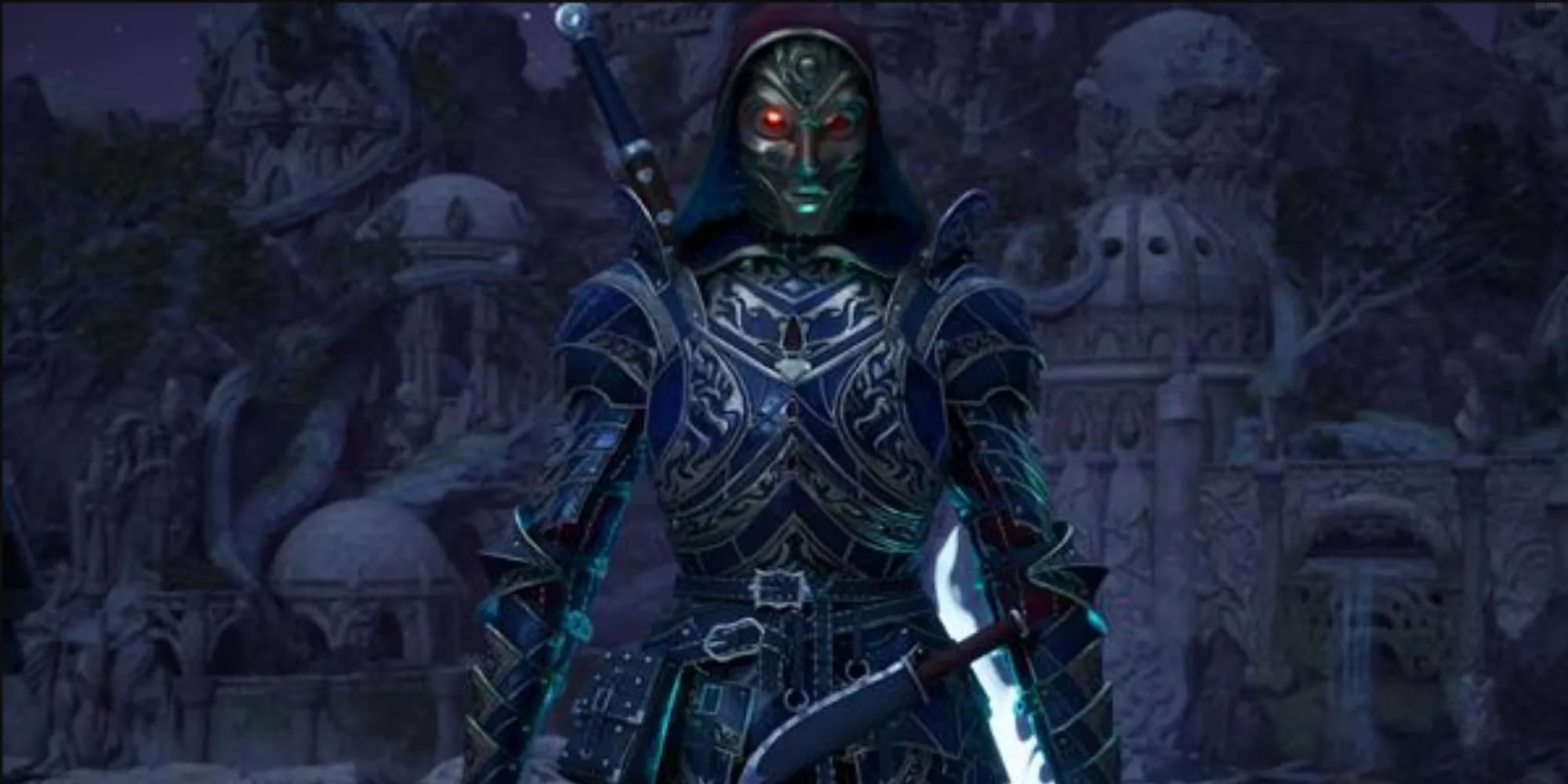
Avowed smartly avoids simple good vs. evil dichotomies, but let's be real: the Steel Garrote are the primary antagonists. They're brutal, they revel in violence, and they're led by the intimidating Inquisitor Lödwyn. 🩸 How you first encounter them sets the tone. If your first major interaction is successfully foiling their plans in 'Steel Resolve,' they can come off as somewhat... thwartable. But if your first real encounter with them is witnessing the apocalyptic inferno they unleash upon Fior? That leaves a bone-chilling, unforgettable impression. Their success makes them a far more effective and fearsome antagonistic force. It establishes them as a genuine, overwhelming threat, not just a nuisance to be managed. Seeing their plans come to full, horrifying fruition makes the rest of your conflict with them feel much more urgent and personal.
💔 Giatta's Motivation Reaches Its Peak
This choice deeply affects your companions, especially Giatta. 🧙♀️ Fior is her home, and her parents are there. Of course she's upset if it's damaged, but the complete annihilation of her home town turbocharges her motivation and character depth. "They destroyed my home and I can never go back" carries a visceral, primal pain that "they damaged my city and it needs repairs" simply doesn't match. This tragedy fuels her character development and colors every future conversation. When NPCs invoke the memory of Fior later in the game, those lines hit with the force of a sledgehammer if the city is just a smoldering ruin—a ruin you couldn't save. It creates richer, more tense interactions and deepens your connection to your party members.

⚖️ The Stakes Are Sky-High for the Rest of the Game
Fior's destruction isn't just a one-off event; it sets the narrative tone for everything that follows. 🌋 Watching a city burn, knowing your actions (or inaction) contributed to it, is a masterful way to raise the stakes. After that, there's a palpable, ever-present sense of danger. What's the next worst thing that could happen? What if you fail again? This established 'worst-case scenario' makes every subsequent decision feel heavier. It's like the difference in Star Wars if Alderaan had just been lightly scratched versus being obliterated. One is an incident; the other is a galactic-scale tragedy that defines the conflict. Letting Fior burn makes the Living Lands feel like a place where real, terrible consequences are not just possible, but likely.
🎭 The Player vs. The Audience Dilemma
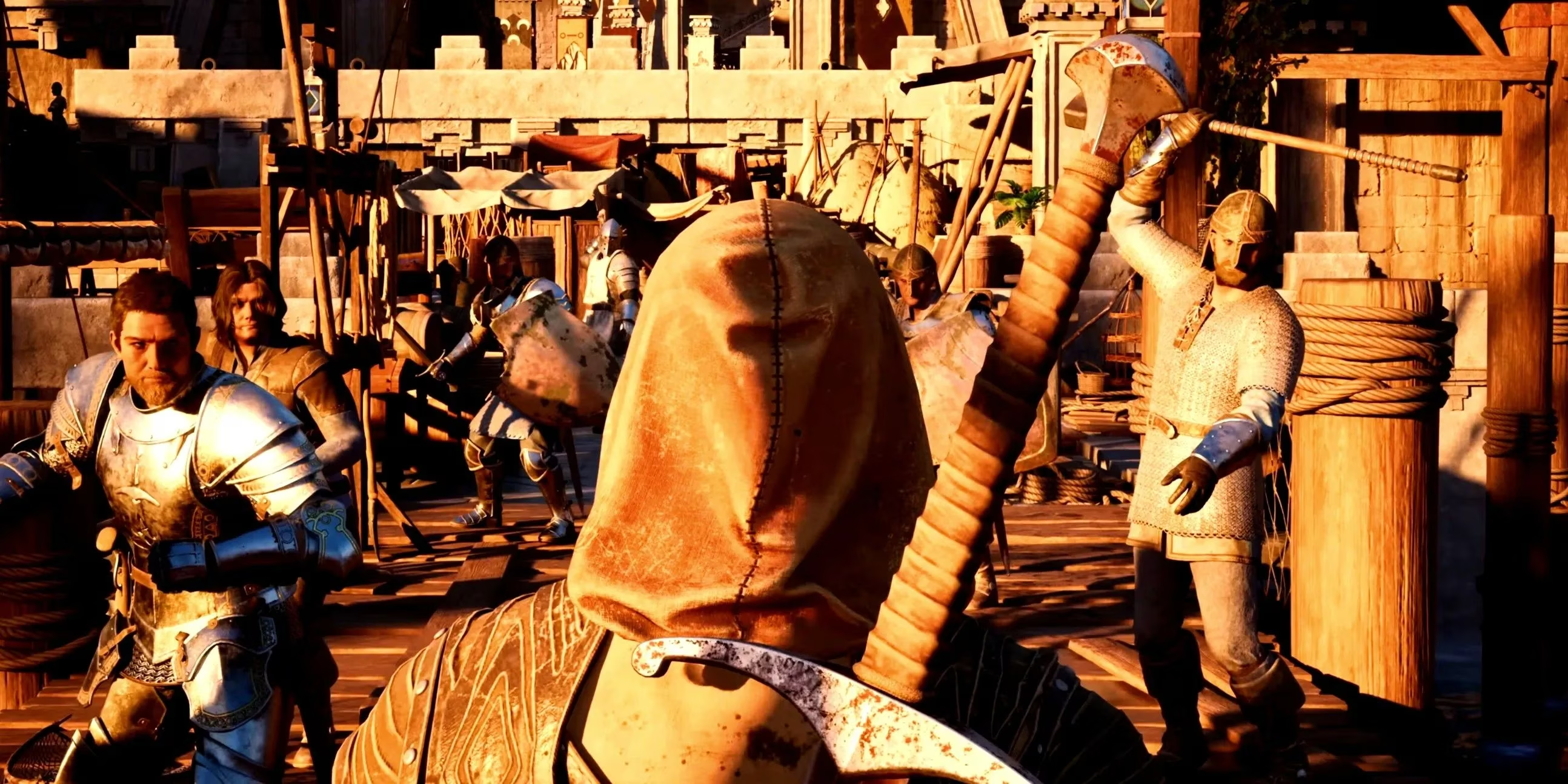
This is the core of what makes this choice so brilliant. As a player, we naturally want to succeed. We want to save the city, get the best rewards, and keep our companions happy. That's our role-playing instinct. But if we take a step back and look at Avowed strictly as a story we are experiencing, the narrative becomes more powerful, nuanced, and dramatic when our protagonist makes a major, heartbreaking mistake. It introduces flaw, guilt, and a driving need for redemption that a perfectly successful run lacks. It's a testament to Obsidian's storytelling that they crafted a scenario where 'failing' a quest can lead to a more memorable and emotionally engaging tale.
So, next time you play, consider letting Fior fall. Embrace the failure. Feel the weight of that ash on your hands. You might just find it's the most compelling story Avowed has to tell. 📖✨
Quick Recap of the Narrative Benefits:
-
Character Growth: The Envoy's first major failure adds depth and motivation.
-
Villain Threat: The Steel Garrote seem infinitely more intimidating.
-
Companion Depth: Giatta's arc becomes profoundly more emotional.
-
Raised Stakes: The entire world feels more dangerous and consequential.
-
Dramatic Tension: The story gains a powerful, somber tone that resonates throughout.
What do you think? Would you choose the 'better' outcome or the 'better' story? Let me know your thoughts! 💬